
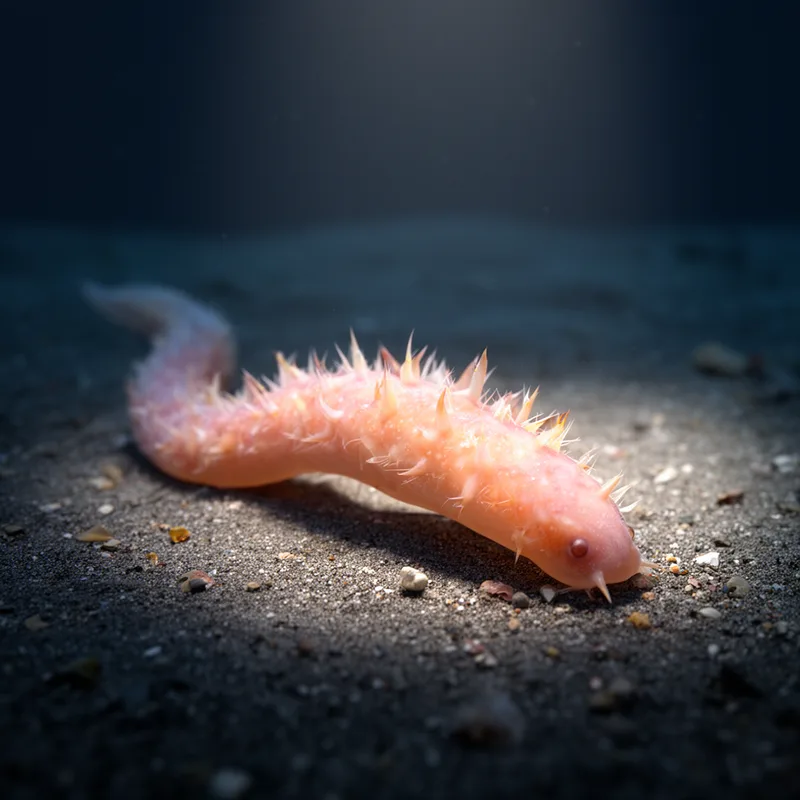
solenogaster
- noun
- /ˌsɒlɪˈnɒɡəstər/
- Specialized
- Unlike most mollusks, a solenogaster does not have a shell, but features a soft and spiny mantle.
Examples
-
The deep-sea expedition collected several fascinating specimens of solenogaster from the ocean floor.
-
Many solenogasters inhabit deep-sea environments.
-
A solenogaster moves slowly along the substrate, searching for tiny prey among the sediment.
-
The solenogaster is a fascinating marine creature.
-
A solenogaster moves slowly along the substrate, searching for tiny prey among the sediment.
-
The deep-sea expedition collected several fascinating specimens of solenogaster from the ocean floor.
-
Unlike most mollusks, a solenogaster does not have a shell, but features a soft and spiny mantle.
Synonyms
A small soft sea animal like a worm with no shell and tiny spines on its skin
Surface Forms
Morphology
solenogaster = solen + gaster
A technical taxonomic coinage from specialized combining forms; the components are not productive or informative for an average B1 learner and do not yield the sense of the marine mollusk.
Etymology
Solenogaster comes from Greek parts solen- meaning 'tube' and -gaster meaning 'stomach' or 'belly', and the -gaster part is the same root you see in gastric ('about the stomach'). So a solenogaster is a long, wormlike mollusk with a soft, belly-like body instead of a hard shell.

