
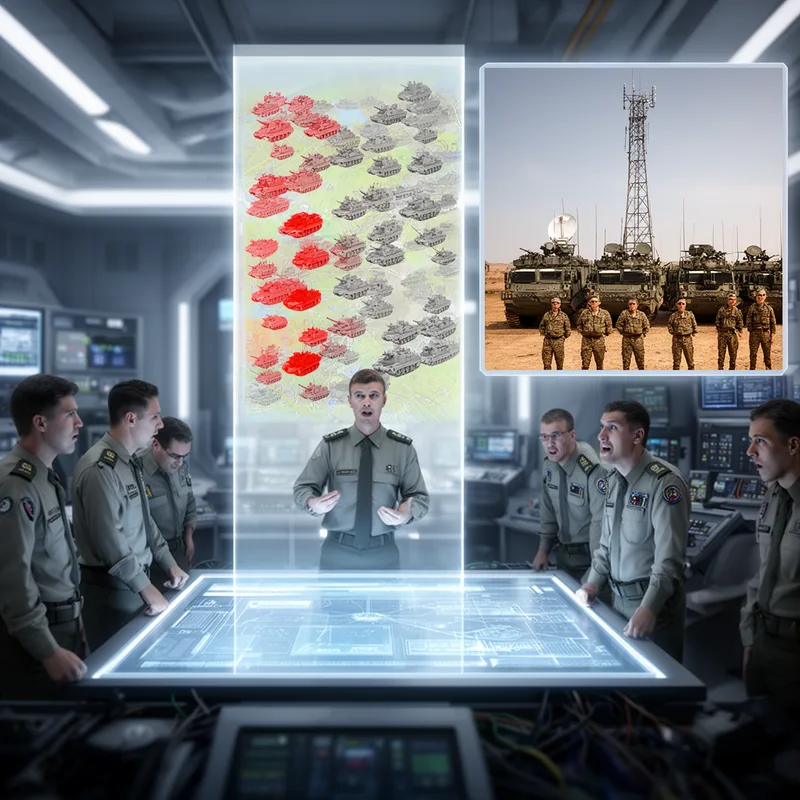
soft kill strategy
- noun
- /sɔft kɪl ˈstrætədʒi/
- NSFW
 :
estrategia de eliminación suave
:
estrategia de eliminación suave
- The military deployed a soft kill strategy to disable the enemy’s communications without loss of life.
Examples
-
The commander preferred a soft kill strategy to neutralize threats with minimal collateral damage.
-
Advanced technology allows for a soft kill strategy that targets vehicle electronics instead of physical destruction.
-
The military developed a new soft kill strategy for non-lethal engagements.
-
Can you explain the soft kill strategies used in modern warfare?
-
The military employed a soft kill strategy to disable enemy drones without causing casualties.
-
By utilizing a soft kill strategy, the defense team managed to incapacitate the attackers' equipment while ensuring civilian safety.
-
The use of a soft kill strategy in urban areas helps prevent fatalities while still neutralizing armed threats.
How Lethal


Surface Forms
Morphology
The components 'soft' (non‑lethal/less forceful) and 'strategy' (plan) give a partial clue and 'kill' can be used metaphorically to mean neutralize or disable, so a learner might tentatively infer 'a plan to disable without lethal force'. However, this is specialized military jargon and the meaning of 'kill' as non‑destructive incapacitation is a metaphorical, domain‑specific extension that an average B1 learner would not reliably predict without exposure.
Etymology
Soft kill strategy comes from the idea of using a soft way to kill a machine or system—imagine cutting power or jamming signals so a car or radio will 'stop working' instead of being smashed. So, it means a plan to stop people, vehicles, or equipment from working without killing them or causing big damage.