

sodbuster


 1
9.9
1
9.9
- noun
- /ˈsɔdˌbʌstər/
- Archaic
- Such "sodbusters," spurred by Manifest Destiny, were despised by mountain men.
Examples
-
We were going about our business when this crazy sodbuster came in.
-
Is that the talk of a mild old sodbuster?
-
Now, listen, all you sodbusters, you hard-rock farmers.
-
You sodbusters are a brave bunch when you're together, but don't vote any way now that you'll regret later when you're alone.
-
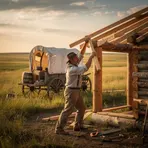
In the late 1800s, many sodbusters moved to the Great Plains to farm the unbroken land.
-
The sodbuster worked tirelessly to turn the dry prairie into productive farmland.
-
After years of hard work, the sodbuster finally reaped the rewards of his labor with a bountiful harvest.
Synonyms
 898
1.0
898
1.0
A person who grows crops or raises animals on a farm
 8
8.6
8
8.6
A person who works on a farm, often a member of the National Grange
 7
6.9
7
6.9
A person who moves to empty land and works it so the government lets them own it
 4
5.6
4
5.6
A person who breaks and turns soil to prepare land for planting

A person who grows or sells grain like wheat
Surface Forms
Morphology
Etymology
Sodbuster comes from sod, meaning 'the top layer of earth and grass', and buster, from 'to bust' meaning 'to break'. It was used for farmers on the American plains who 'broke' the hard sod to plant crops, so it now means a farmer who opens new land for farming.