
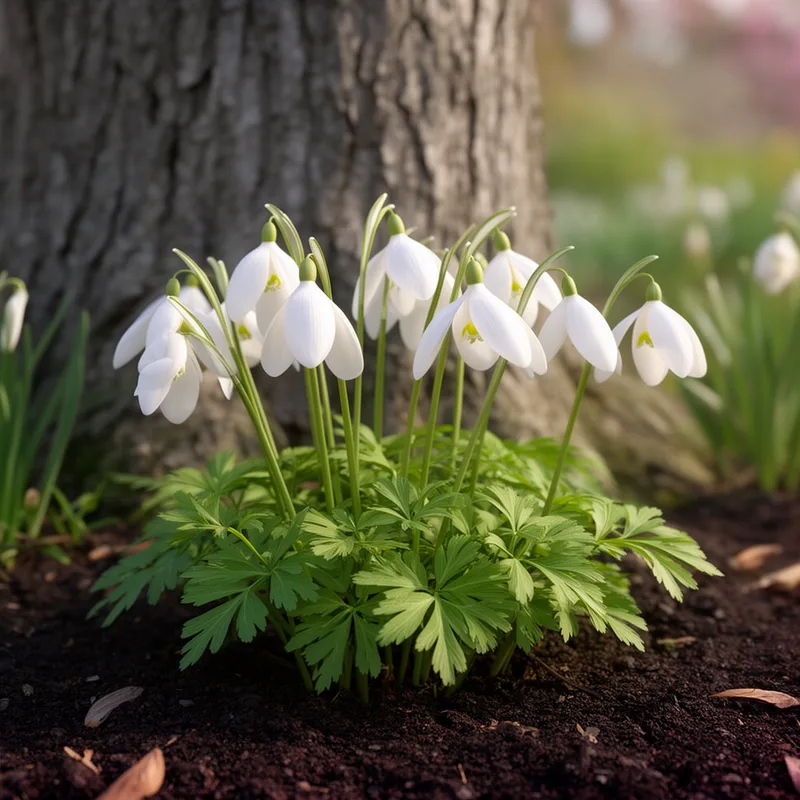
snowdrop anemone
- noun
- /ˈsnoʊˌdrɒp əˈnɛməni/
- Gardeners prize the snowdrop anemone for its graceful white flowers and easy care.
Examples
-
The snowdrop anemone blooms early in the spring, adding a delicate touch to the garden.
-
I planted several snowdrop anemones in my garden.
-
A cluster of snowdrop anemones grew beneath the old oak tree, brightening the shady spot.
-
The snowdrop anemone blooms in early spring.
-
A cluster of snowdrop anemones grew beneath the old oak tree, brightening the shady spot.
-
Gardeners prize the snowdrop anemone for its graceful white flowers and easy care.
-
The snowdrop anemone blooms early in the spring, adding a delicate touch to the garden.
Synonyms
A small plant with white, nodding flowers that smell sweet and bloom in early spring

A small plant that lives for several years with white, sweet-smelling, nodding flowers often found in woods and gardens
Surface Forms
Morphology
The noun-noun compound denotes an anemone that resembles or is associated with a snowdrop; a B1 learner who knows 'snowdrop' (a bell-shaped white spring flower) and 'anemone' (a plant genus) can infer it is an anemone with snowdrop-like, white, nodding flowers. This botanical compositional pattern is regular and cross-linguistically common, so the overall meaning is directly derivable from the constituents.
Etymology
Snowdrop anemone: The name snowdrop anemone comes from its small, nodding white blooms that look like a snowdrop, and from anemone, an old word from a word for 'wind' used for light, delicate flowers. So the name paints the picture of a small white 'flower' that shows up in early 'spring' and is often grown for its pretty look.

