
snow-in-summer
- noun
- /snoʊ ɪn ˈsʌmər/
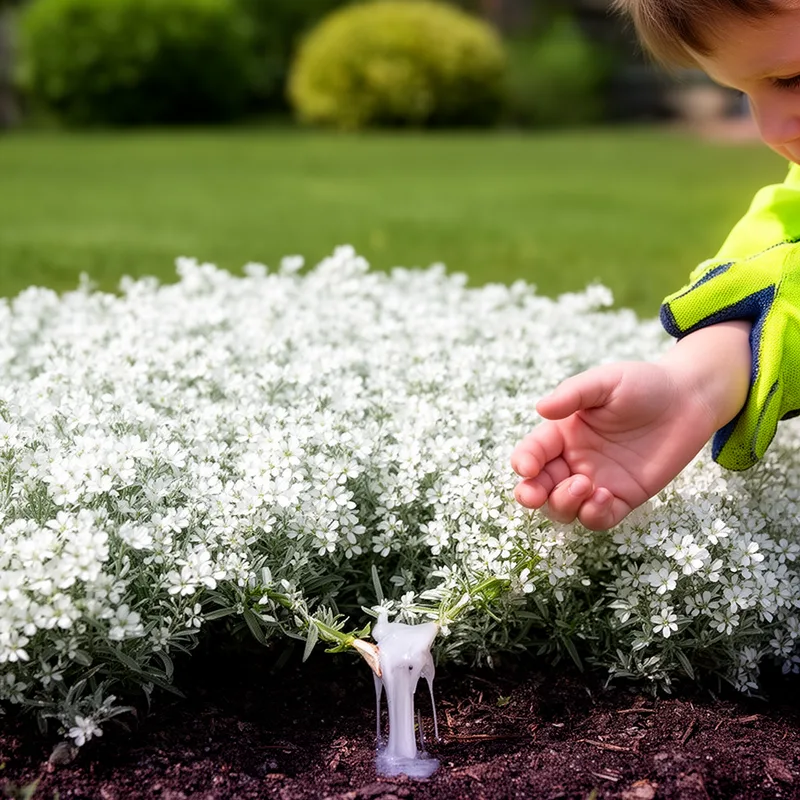
- In the spring, the garden was awash with the delicate white flowers of snow-in-summer, creating a beautiful ground cover.
Examples
-
The snow-in-summer blooms beautifully in June.
-
I planted snow-in-summer in my garden last year.
-
Children are often attracted to the bright clusters of snow-in-summer, unaware of its toxic nature.
-
Gardeners should be cautious, as snow-in-summer contains a very poisonous milky sap.
-
The fields in Colorado were dotted with patches of snow-in-summer during late spring.
-
Many gardeners choose snow-in-summer for its vibrant clusters of white flowers that bloom when other plants are fading.
-
Although snow-in-summer is lovely in gardens, some varieties can be toxic to pets if ingested.
Synonyms
A low plant with soft silver-grey leaves that makes a white carpet of small flowers
Surface Forms
Morphology
snow-in-summer = snow + summer (semi-transparent) = in + snow + summer
The components 'snow', 'in', and 'summer' are literal and recognizable, but the phrase is a fixed common name for a plant, so learners may not predict the referent (a plant) from components alone. [Postprocessing: moved 'in' from base_words to prefix]
Etymology
Snow-in-summer was given as a name because the plant's many white, low flowers look like snow on the ground in summer. So the name is an easy picture: it tells you this is a low ground-cover with bright white blooms, although some kinds have a milky sap that can be poisonous.

