

slippery elm
- noun
- /ˈslɪpəri ɛlm/
- Specialized
- Many herbalists recommend slippery elm for digestive issues.
- slippery elm bark
Examples
-
The inner bark of the slippery elm is often used in traditional medicine.
-
The slippery elm is known for its medicinal properties.
-
Many North American forests once had abundant slippery elm trees, but their numbers have declined.
-
We planted a slippery elm in the backyard to provide shade during the summer.
-
The inner bark of slippery elm is often used to soothe sore throats.
-
Many herbalists recommend slippery elm for its calming effects on stomach issues.
-
In traditional medicine, slippery elm has been valued for its properties that relieve digestive discomfort.
Synonyms
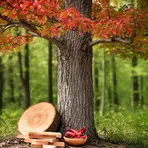
A North American elm tree with rough, reddish young leaves and hard wood

A North American elm tree with red leaves or bark and hard, strong wood
Surface Forms
Morphology
The compound refers to a type of elm that has a slippery quality (historically its inner bark), so its meaning is the straightforward combination of 'slippery' + 'elm' rather than an idiom. A B1 learner who knows both words can infer it denotes an elm with slippery characteristics, making the term compositional and immediately understandable.
Etymology
Slippery elm is named for the tree's inner bark: the word slippery describes the slimy feel and elm is the tree. People used this 'slippery' bark as a simple medicine to soothe sore throats, so the name came to mean the tree and its healing bark.

