

slender wheatgrass
- noun
- /ˈslɛndər ˈwiːtˌɡræs/
- Specialized
- Farmers often grow slender wheatgrass for livestock.
Examples
-
Researchers found that slender wheatgrass improves soil health while serving as quality forage.
-
The slender wheatgrass thrives in dry climates.
-
Farmers in Montana often plant slender wheatgrass to provide hardy pasture for livestock.
-
The slender wheatgrass quickly established itself after the prairie was restored.
-
Farmers in Montana often plant slender wheatgrass to provide hardy pasture for livestock.
-
Researchers found that slender wheatgrass improves soil health while serving as quality forage.
-
The slender wheatgrass quickly established itself after the prairie was restored.
Synonyms
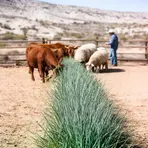
A North American grass that farmers grow for food for farm animals in dry areas
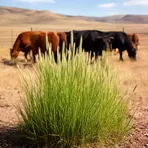
A North American grass that farmers grow in the western United States to feed cattle
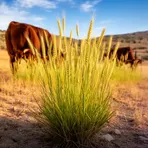
A North American grass grown as food for farm animals in dry western areas
Surface Forms
Morphology
The noun phrase is a straightforward adjective+noun composition: 'slender' (thin) modifies 'wheatgrass' (a type of grass), so a B1 learner who knows both words can infer it denotes a thin variety of wheatgrass. This follows common cross-linguistic adjective–noun combination patterns and requires no idiomatic or metaphorical knowledge.
Etymology
Slender wheatgrass was named for how it looks: slender means thin and wheatgrass shows it is a grass that looks a bit like young wheat. Farmers grow it as 'forage', or food for animals, so the name fits a thin grass used for pasture.

