

slam dancing
- noun
- /slæm ˈdænsɪŋ/
- Informal
 :
slam dance
:
slam dance
- Vikki enjoyed slam dancing at punk rock concerts, where everyone bumped into each other energetically.
Examples
-
When Vikki was a senior, she was wearing combat boots and slam dancing to the Clash.
Fiction book (1994) -
SCOTTY pushes his way through a slam-dancing crowd as he is picked up and bodily tossed through the air by a frenzied mob of "body-surfing" dancers.
Fiction book (1994) -
The audience of on-the-edge kids goes berserk, guzzling beer and slam dancing with frightening intensity.
Fiction book (1994) -
MOM, now caught in the front row of laughing slam-dancing spectators, turns to her dumbstruck family, smiles, and sticks her fingers in her ears, mimicking that the music is much too loud.
Fiction book (1994) -
During the concert, the crowd exploded with excitement as they started slam dancing to the fast-paced music.
-
The slam dancing at the venue created an electrifying atmosphere, with fans enthusiastically bumping into one another.
Synonyms
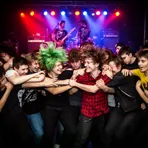
A style of dancing where people bump into each other on purpose, usually at punk shows
Antonyms



How Violent

Surface Forms
Morphology
The meaning is directly and compositionally built from 'slam' (forcefully hit or collide) + 'dancing' (moving rhythmically), so a B1 learner who knows both words can infer it refers to a form of dancing involving forceful collisions. Although the term is register-specific (slang from punk/mosh culture), its sense is transparent from the constituents and common cross-linguistically in descriptions of rough partner/group dancing.
Etymology
Slam dancing comes from punk rock shows where people would slam into each other while dancing. The image of the crowd bumping and pushing explains why the phrase now means 'a rough, energetic style of dance where people forcefully bump into each other'.