

skull and crossbones
 3
4.2
3
4.2

- noun
- /skʌl ənd ˈkrɔsˌboʊnz/
- The warning label on the bottle featured a skull and crossbones, indicating that the contents were poisonous.
- skull and crossbones on the label
- skull and crossbones insignia
- skull and crossbones T-shirt
Examples
-
And on the flag you see skull and crossbones and you realize the pirates are coming.
-
Its fake crayoned label showed a skull and crossbones.
Fiction book (2000) -
And it's flying the skull and crossbones.
-
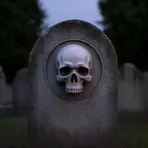
I saw then that every stone around us had a skull and crossbones on it.
Fiction book (2002) -
The skull and crossbones means one thing: Poison.
-
Their flag is flying from the main mast: the skull and crossbones.
Fiction book (1998) -
Two white vials roll out of the drug dealer's shirt, marked with red skull and crossbones.
Fiction book (1999) -
Hazmat pulls out a vial marked with a red skull and crossbones and shows it to Frank.
Fiction book (1999) -
At the very bottom of the plinth that held the urn, a tiny skull and crossbones had been scratched.
Fiction book (2002) -
Well, if we want to remind people of danger, why don't we slap a skull and crossbones on all Boeing airplanes, Senator Lothridge?
Synonyms
 1
6.7
1
6.7
Two bones crossed like an X used to show danger or death

 1
9.1
1
9.1
An image or object of a human skull used as a symbol of death
Surface Forms
Morphology
The phrase literally names its constituents — a skull and crossed bones — so a learner who knows 'skull', 'and', 'cross' and 'bones' can directly infer it refers to that depicted symbol. Its conventional use as a warning of danger or poison is culturally widespread but rests on transparent, compositional imagery rather than an idiomatic shift.
Etymology
Skull and crossbones shows a human skull above two crossed bones; one popular story says people used that picture on old graves and on pirate flags to stand for 'death'. So the image became a clear way to warn people of 'danger' or 'poison'.