

to skulk
 20
7.7
20
7.7

- verb
- /skʌlk/
- The children decided to skulk away from the party to play in the park.
- skulk away
- skulk back
- skulking in the dark
Loading YouTube…
Watch on YouTubeOr maybe they thank their lucky stars that they weren't caught and they skulk off to their own mansions and yachts, where hopefully we never need to hear from them again.
- Or maybe they thank their lucky stars that they weren't caught and they skulk off to their own mansions and yachts, where hopefully we never need to hear from them again.
Examples
-
All summer, the boys have skulked along the bank beneath the houses.
Fiction book (2000) -
Stop skulking behind that screen.
-
Nobody knows how many of these dangerous creatures skulk along the northern coast of Australia.
Academic text (2011) -
So off to the discount store they did skulk.
-
After a while, a few of the kids get bold and come skulking up to the wall.
Fiction book (1995) -
I believe Tibeats is skulking about the premises somewhere.
-
You were seen skulking around my marquee -- you and two rough-looking laborers.
-
Then they shook their long ears, rattled their collars, and skulked down in the dust again.
Fiction book (1990) -
The cat began to skulk around the backyard, trying to avoid the attention of the dog.
-
She skulked through the hallways, hoping not to be seen by her teachers.
Synonyms
 155
2.5
155
2.5
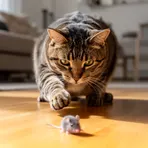
To move slowly and quietly with the body low to the ground
 104
5.5
104
5.5
To stay hidden and move secretly to watch or frighten people
 35
5.3
35
5.3
To move quietly around a place looking for something
 31
5.5
31
5.5
To move quickly with short hurried steps, often to hide or escape
 16
6.7
16
6.7
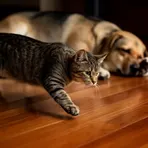
To move quietly and carefully to avoid being seen
 5
8.1
5
8.1
To move slowly and quietly to the side to avoid being noticed
 1
6.8
1
6.8
To move quietly and smoothly so people do not notice


 1
8.6
1
8.6
To hide and move quietly in dark places to avoid being seen
 1
7.9
1
7.9
To move sideways past someone quietly without being noticed

To act in a secret, quiet way to avoid being seen

To move quietly and carefully to avoid being noticed

To move around quietly while looking for something to catch or eat
Antonyms


Phrasal Verbs
How Secretive

Surface Forms
Etymology
Skulk comes from an old Norse word skulka meaning 'to hide' or 'to avoid work'. So to skulk today is to move quietly or sneak away to avoid being seen or to avoid doing work.