
skin effect
- noun
- Specialized
 :
efecto piel
:
efecto piel
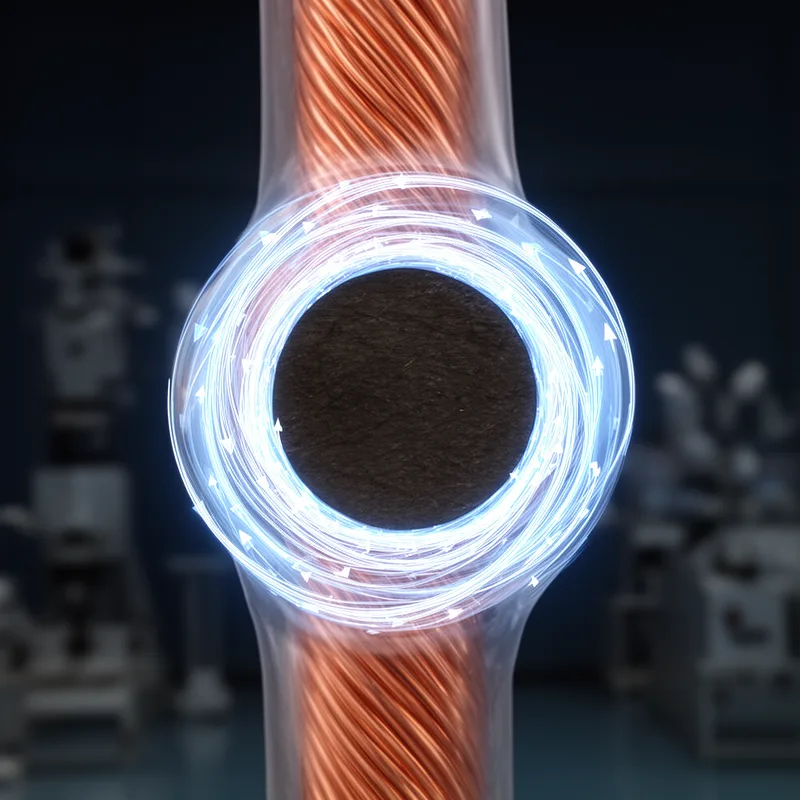
- The skin effect results in increased resistance at high frequencies, impacting the efficiency of electrical systems.
Examples
-
Skin-effect losses are significant when multiple line equations cannot be represented in ASCII text.
Academic text (1995) -
As signal speeds increase, losses due to the skin effect could become important.
Academic text (1995) -
One is known as skin effect that I'm going to talk about now.
-
Although skin effect is not fully developed in lines of such small cross-section, frequency-dependent modeling improves accuracy.
Academic text (1995) -
The onset of skin effect is more noticeable for the t = 2.1-mum-thick M5 lines.
Academic text (1995) -
These algorithms are optimized to provide a good fit to the transfer function over a wide frequency range, with special emphasis on the high-frequency region where skin-effect losses are important.
Academic text (1995) -
At high frequencies, the skin effect causes alternating current to flow primarily near the surface of the conductor.
-
Engineers must consider the skin effect when designing circuits that operate at high frequencies.
Surface Forms
Morphology
The noun-noun compound combines 'skin' (surface layer) with 'effect' (a result), so a learner who knows both words can infer it denotes an effect occurring at or near the surface of something. While the precise electromagnetic details require technical knowledge, the general sense is compositionally transparent and follows a common English compounding pattern.
Etymology
Skin effect The term skin effect comes from the image of electric current staying like a thin skin on the outside of a metal wire. The effect is that when the current changes very fast it flows near the surface instead of through the middle, so the phrase means 'current flowing near the surface'.

