

skiffle
 2
9.4
2
9.4

- noun
- /ˈskɪfəl/
- Archaic
- During the 1950s, skiffle became a popular music style, blending traditional folk and blues influences.
- skiffle band
Examples
-
The lively sound of skiffle music filled the streets, as groups gathered to perform at local parks.
-
The stage had just been vacated by what the locals called a "skiffle" band (guitar, bass, and tea chest) as we made our way to a conveniently vacant table near the front.
Fiction book (1996) -
Before that I was in a group called The Creatures-a skiffle group.
-
A pal of mine, Dave Brooksbank, said that we were gonna set up a skiffle group.
-
It's a skiffle band.
-
Readers learn that Aunt Mimi informed John he would never earn a living by playing the guitar, that Paul wrote his first song to express his sadness after his mother died, that Ringo learned to play the drums while in the hospital, and that George loved the sound of British "Skiffle" music so much he begged his mother for a guitar.
Academic text (2012) -
In the 1950s, many teenagers in Britain formed bands to play skiffle, using everyday objects as instruments.
Compounds
- Archaic

 1
8.1
1
8.1
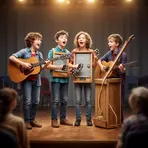
A small band that plays folk and blues songs with guitars and homemade instruments
Surface Forms
Etymology
Skiffle may come from the English word skiff 'small boat' or from old American slang for informal music groups, giving a picture of something small and portable. Think of a tiny boat on the water to remember that skiffle music is simple, lively, and often played with basic or homemade instruments.