
skald


 1
9.9
- noun
- /skɔld/
- Archaic
- Lonesome it is when the sea-steeds toss their frothy manes far from the home-hearth. - Kragish Skald
- skald and poet
- the old skald
Examples
-
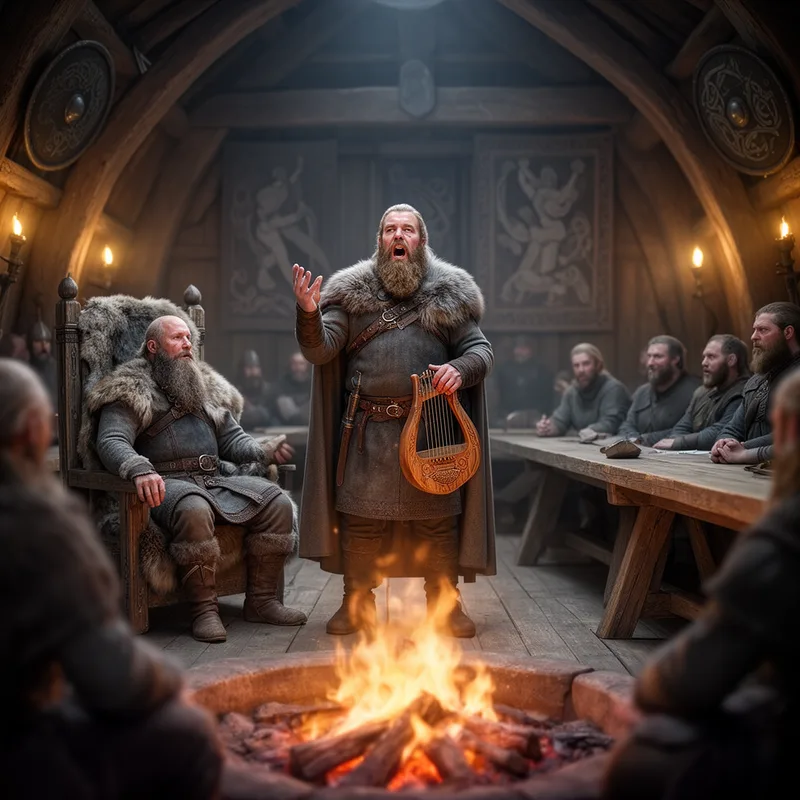
The Vikings used their skalds in a similar way.
Academic text (2008) -
In the great hall, the skald captivated the audience with his powerful poetry.
-
"Well, brother, what do you think of my new skald, my female skald?"
Fiction book (1994) -
"Will you continue to be my skald?"
Fiction book (1994) -
Just imagine, Laren, he would gain both a cook and a skald.
Fiction book (1994) -
But then there came a story into Vestfold told by a very old skald, toothless and scrawny, with thin bowed legs.
Fiction book (1994) -
Though skalds were verbal artisans first and recorders of events second, they often witnessed the deeds they celebrated.
Academic text (1996) -
"There were murmurs of protest, and Erik looked as though he would explode, for even as a child, he would sit before the skald listening so intently that their mother could call him and he would not hear her.
Fiction book (1994) -
The skald recited tales of ancient battles by the flickering firelight.
-
As a talented skald, she wove stories that immortalized the heroes of her time.
Synonyms
 1
6.1
A person who writes songs and poems about ordinary people and their local stories
 1
6.7
A person who writes and sings folk songs that tell stories
Surface Forms
Etymology
The word skald comes from Old Norse skald, which meant 'poet' or 'singer of poems'. These poets sang long heroic poems in Viking halls, so skald today means a Norse poet or storyteller, much like the English word bard.