
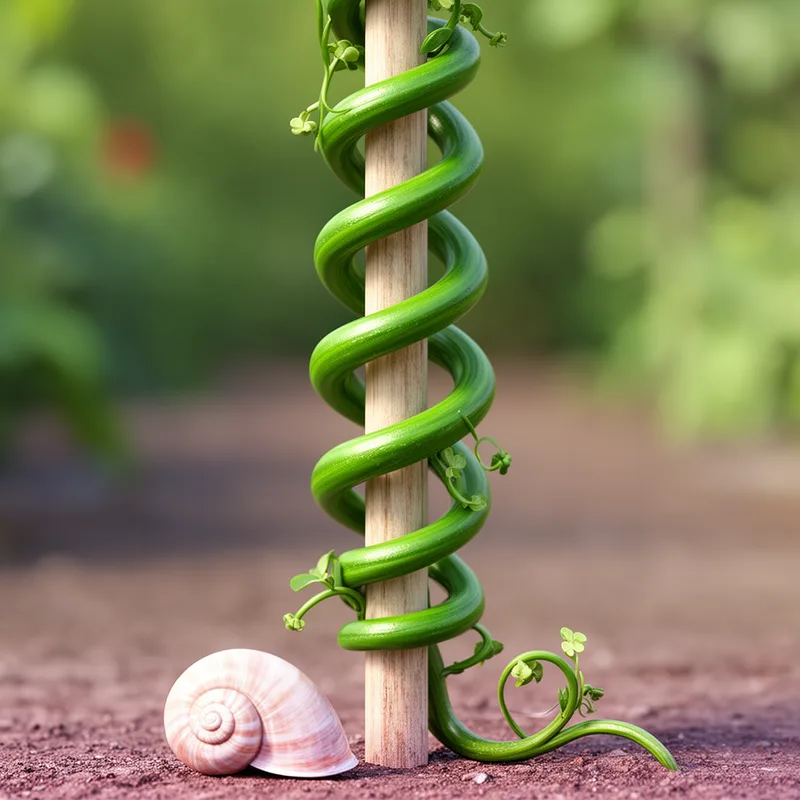
sinistrorsal
- adjective
- /ˌsɪnɪˈstrɔrsəl/
- Specialized
- The morning glory is a sinistrorsal vine, twining from right to left as it climbs.
Examples
-
Some climbing plants exhibit sinistrorsal coiling, contrasting with species that spiral in the opposite direction.
-
Certain species of snails have a sinistrorsal spiral in their shells, which turns to the left.
-
Scientists noted the sinistrorsal pattern in the shell's growth.
-
The sinistrorsal vine twisted around the trellis.
-
Some species of shells exhibit a sinistrorsal pattern.
-
The sinistrorsal growth of the vine caused it to wrap around the support in a counter-clockwise direction.
-
Gardeners often prefer sinistrorsal plants for their unique left-handed twisting as they climb upwards.
Synonyms


 1
9.9
On the left side of animals or objects, for example a flatfish
A stem or vine that twists upward from right to left
Antonyms

- Specialized
A spiral that turns upward or outward to the right, like vines and shells
How Left-Coiling
- Specialized

- Specialized
Surface Forms
Morphology
sinistrorsal = sinistrorse (semi-transparent) = sinistrorse + al
The word is a regular adjectival formation on the specialized base 'sinistrorse', but that base is technical and unlikely to be familiar to general learners.
Etymology
Sinistrorsal comes from the Latin word sinister, which means 'left', plus a second part that means 'to turn' or 'to rise', as in the related word sinistrorse. So sinistrorsal literally describes a spiral that turns toward the left as it grows upward, which is why we use it for shells and vines that coil from right to left.