
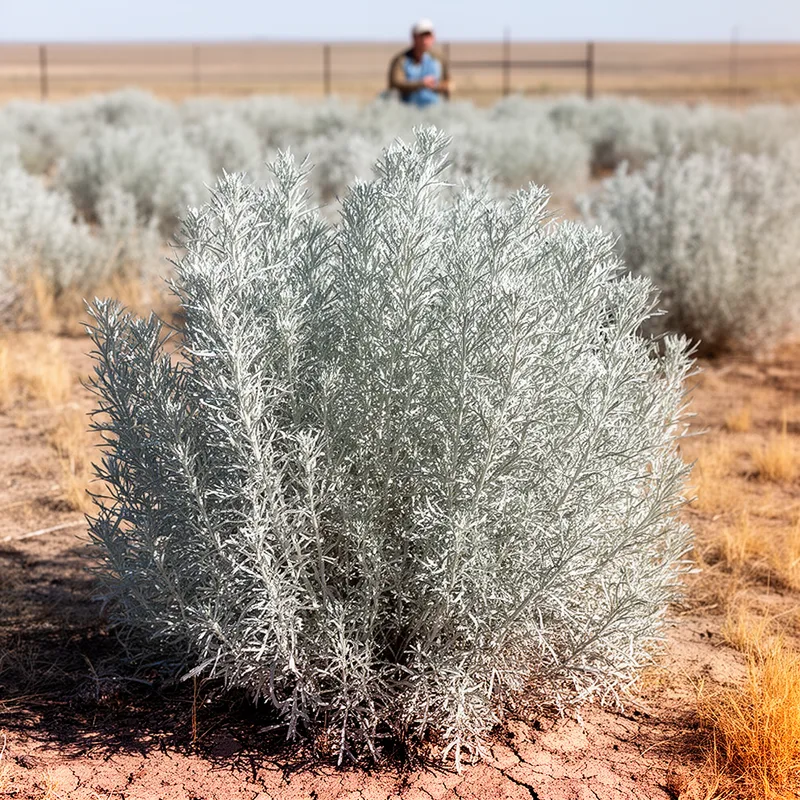
silvery wormwood
- noun
- /ˈsɪlvəri ˈwɜrmˌwʊd/
- US
- Silvery wormwood is known for its distinctive silver leaves and resilience in dry climates.
Examples
-
The rancher struggled to control silvery wormwood spreading across his grazing land.
-
The dense growth of silvery wormwood can quickly overtake native plants in arid regions.
-
Many farmers consider silvery wormwood a nuisance weed due to its rapid growth.
-
The silvery wormwood grows abundantly in dry areas.
-
Many farmers consider silvery wormwood a nuisance.
-
Silvery wormwood is considered by many ranchers to be a troublesome weed in their pastures.
-
Farmers often struggle with the invasive nature of silvery wormwood in their fields.
Synonyms

A small bush with silver leaves that grows on dry grasslands
A silver-grey shrub that grows on plains in the United States and Mexico and often becomes a weed in pastures
Surface Forms
Morphology
silvery + wormwood
This is a straightforward adjective + noun composition: 'silvery' means silver-colored and 'wormwood' names a plant. The phrase therefore denotes a wormwood plant with silvery foliage, so a B1 learner who knows both constituents can derive the meaning. Adjective+noun descriptive compounds like this are highly compositional and cross-linguistically common.
Etymology
Silvery wormwood probably got its name from two simple facts: silvery describes its pale, shiny leaves, and wormwood was the name for bitter plants people once used to treat 'worms'. So the name helps you remember it is a pale, tough, bitter weed.

