

silver lace vine
- noun
- In spring, clusters of fragrant greenish blooms adorned the silver lace vine in the garden.
Examples
-
Gardeners often choose the silver lace vine to create natural shade on pergolas and trellises.
-
The silver lace vine climbed quickly and covered the entire fence within a year.
-
The silver lace vine blooms beautifully in the spring.
-
I love the scent of silver lace vines in my garden.
-
Gardeners often choose the silver lace vine to create natural shade on pergolas and trellises.
-
In spring, clusters of fragrant greenish blooms adorned the silver lace vine in the garden.
-
The silver lace vine climbed quickly and covered the entire fence within a year.
Synonyms

A climbing plant that grows quickly and has many small green flowers that smell nice

A climbing plant that grows back every year with twining stems and fragrant green flowers
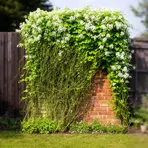
A fast-growing climbing plant that quickly covers fences and walls
Surface Forms
Morphology
The name combines 'silver' (a pale metallic color), 'lace' (a delicate, openwork pattern) and 'vine' (a twining plant), so a B1 learner who knows those words can infer it is an ornamental vine with a silvery, lacy appearance. This is a straightforward descriptive compound following common adjective-noun naming patterns for plants, so the overall meaning is directly derivable from the constituents.
Etymology
Silver lace vine comes from the plant's look: the pale, shiny parts are the silver, the many tiny flowers look like lace, and they all grow on a climbing vine. That's why gardeners call it this name and why the plant is often used as a 'decoration' to cover fences and trellises.

