

siltstone


 1
7.3
1
7.3
- noun
- /ˈsɪltˌstoʊn/
- Specialized
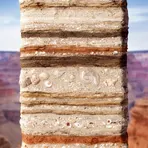
- Shales and siltstones, which are less resistant and thus more vulnerable to erosion, form shallow slopes.
- siltstone and shale
- siltstone and sandstone
Examples
-
For millions of years, sediments accumulated on the seabed and eventually became compressed into layers of siltstone and other sedimentary rocks.
-
They found a 1.5-inch siltstone bed, which, upon being split, revealed pyritized Triarthrus at the predicted level.
Academic text (1992) -
Under the clay, only a few feet below our feet, is limestone, siltstone, and sandstone.
Fiction book (1991) -
Nonetheless, the rainfall had a devastating effect on unstable tephra-mantled slopes of siltstone.
Academic text (1991) -
Deposits left by that ancient tidal environment turned into layers of sandstone, shale, and siltstone.
Academic text (2009) -
The Woodbine consists of sandstone and siltstone rocks, located at about 7,400-9,400 foot depths across several counties north of Houston.
Blog text (18) -
But the Entrada Formation, made up of both resistant sandstone layers and nonresistant shale and siltstone layers, is pulled in multiple directions.
Academic text (2009) -
Deposits left by ancient environments transformed into layers of sandstone, shale, and siltstone.
-
The geology of the area includes various types of sedimentary rocks such as siltstone, sandstone, and shale.
Synonyms
 3
3.5
3
3.5
Rock made from layers of sand, mud, or broken shells
How Coarse-Grained
- Specialized
1
9.9

- Specialized
1
8.2
- Specialized
18
3.3
- Specialized
1
7.3
- Specialized
57
5.7
Surface Forms
Morphology
Etymology
The word siltstone comes from the parts silt and stone, where silt means 'very fine mud or sand left by rivers' and stone means 'rock'. So siltstone is a rock made when that fine river mud is pressed and turned hard, which is why you often find it in old river or lake beds.