
silk vine
- noun
- /sɪlk vaɪn/
- UK
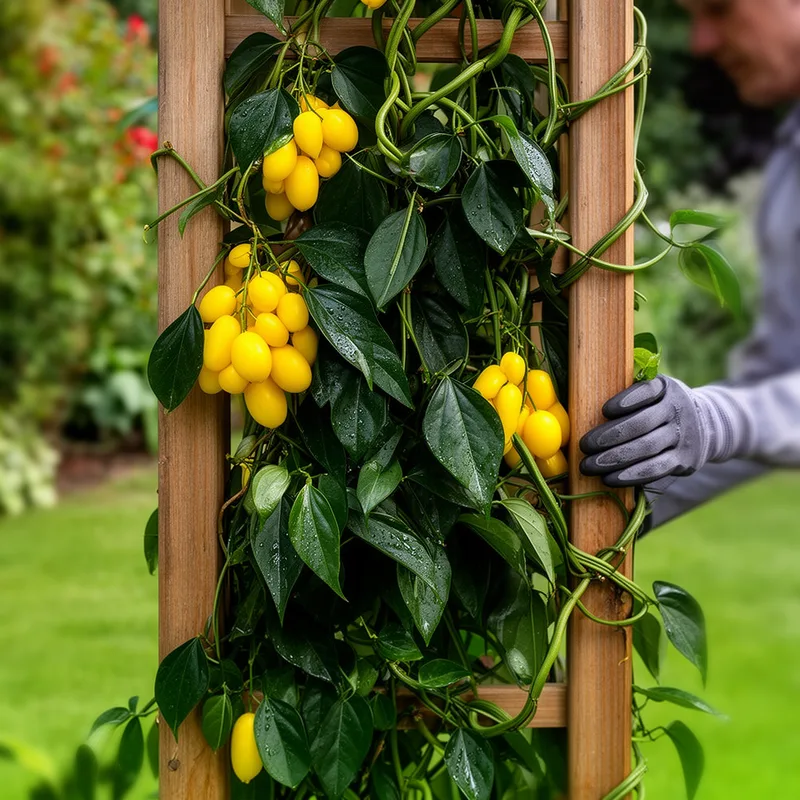
- Despite its attractive look, the silk vine produces yellow fruits that are toxic if ingested.
Examples
-
Many gardeners train silk vine to climb arbors and fences for a dramatic effect.
-
The silk vine is prized for its glossy foliage and unique appearance in garden landscapes.
-
The silk vine grows rapidly in warm climates.
-
Many gardeners choose silk vines for their unique appearance.
-
Many gardeners train silk vine to climb arbors and fences for a dramatic effect.
-
The silk vine is prized for its glossy foliage and unique appearance in garden landscapes.
-
Despite its attractive look, the silk vine produces yellow fruits that are toxic if ingested.
Synonyms

A climbing shrub with dark shiny leaves, small smelly flowers, and poisonous yellow fruit
Surface Forms
Morphology
This is a straightforward noun–noun compound: 'vine' names a climbing plant and 'silk' functions as a descriptive modifier (silky appearance or texture). A B1 learner who knows both words can reasonably infer it denotes a kind of vine with silk-like qualities, so the meaning is compositionally transparent.
Etymology
Silk vine may come from the plant's glossy, soft-looking leaves that remind people of silk and from the way it climbs like a vine. That's why the name helps you remember it as a shiny climbing plant often grown in gardens, even though its yellow fruit can be poisonous.

