
silicic
- adjective
- /sɪˈlɪsɪk/
- Specialized
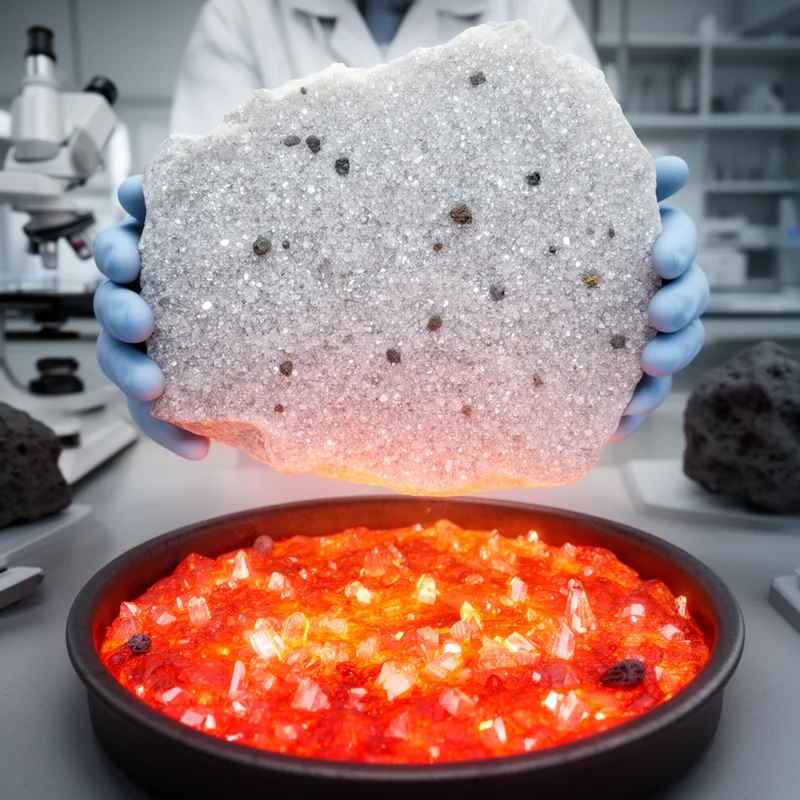
- The Earth's crust is made up primarily of silicic rocks, which contain a high percentage of silicon and oxygen.
- silicic acid
Examples
-
BioSilicon, on the other hand, naturally degrades into silicic acid, a form of silicon found in most foodstuffs, Aston said.
Academic text (2004) -
On the other hand, model-phase relations in less silicic I-type compositions predict the appearance of quartz only later in the crystallization sequence.
Academic text (2018) -
You see, that's due to the lack of silicic itself.
-
Nor was the opposite process lacking, as in the formation of stones from silicic acid of animal origin.
Blog text (30) -
"Unlike the degradation products from polymers like lactides and glycolides, silicic acid, the product from BioSilicon, is a very mild acid expected to cause less irritation."
Academic text (2004) -
The geologist explained that silicic magma is thicker and more viscous than basaltic magma.
-
In the laboratory, we analyzed a sample of silicic mineral to understand its composition.
Synonyms


 1
9.9
1
9.9
Made of or containing silica, the hard material in sand and glass

A rock or material that contains a lot of silica, a hard mineral
Compounds
- Specialized
A weak jellylike acid that forms when silica reacts with water and often dissolves in water or occurs in minerals
Surface Forms
Morphology
silicic = silica (transparent) = silic + ic
Formed from the combining element 'silic-' (from silica) plus the adjectival suffix '-ic', meaning 'relating to or containing silica', which is directly predictable for learners who know 'silica' and '-ic'.
Etymology
Silicic comes from the root silic-, the same root in silica and silicon, which originally came from a Latin word for 'flint' or 'hard stone'. So, silicic means 'containing silica' and is used for rocks and minerals that are rich in that hard, glass-like material.