
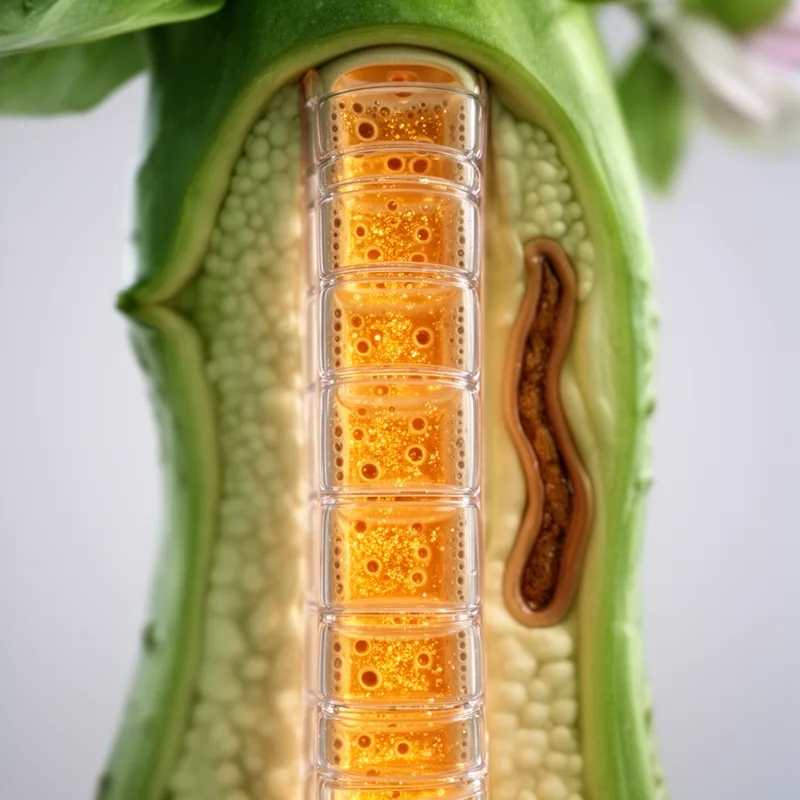
sieve tube
- noun
- /sɪv tuːb/
- Specialized
- Damage to the sieve tube can disrupt nutrient transport and harm the plant's growth.
Examples
-
Sugars move through the phloem via sieve tubes to reach various parts of the plant.
-
Plants rely on sieve tubes for nutrient distribution.
-
Brown algae also contain specialized sieve tubes for conducting organic materials.
-
The sieve tube transports nutrients throughout the plant.
-
The structure of the phloem includes specialized cells known as sieve tubes that play a key role in nutrient movement.
-
Researchers studied the flow of sap through the sieve tubes to better understand plant nutrition.
-
The sieve tube is essential for the transport of nutrients in flowering plants.
Surface Forms
Morphology
The noun is compositionally built from 'sieve' (a perforated/filtering device) + 'tube' (a hollow conduit), so a learner can infer it denotes a tube with sieve-like/porous properties used to let substances pass. However, the precise botanical sense (cells joined end-to-end in the phloem that transport nutrients) is technical and not fully predictable from the constituents at B1, making the term only partially transparent.
Etymology
Sieve tube: The noun sieve tube comes from the image of a long tube made of cells with many tiny holes, like a kitchen sieve. Those holes let plant 'food' flow through, so the name describes the channel that moves food around the plant.

