
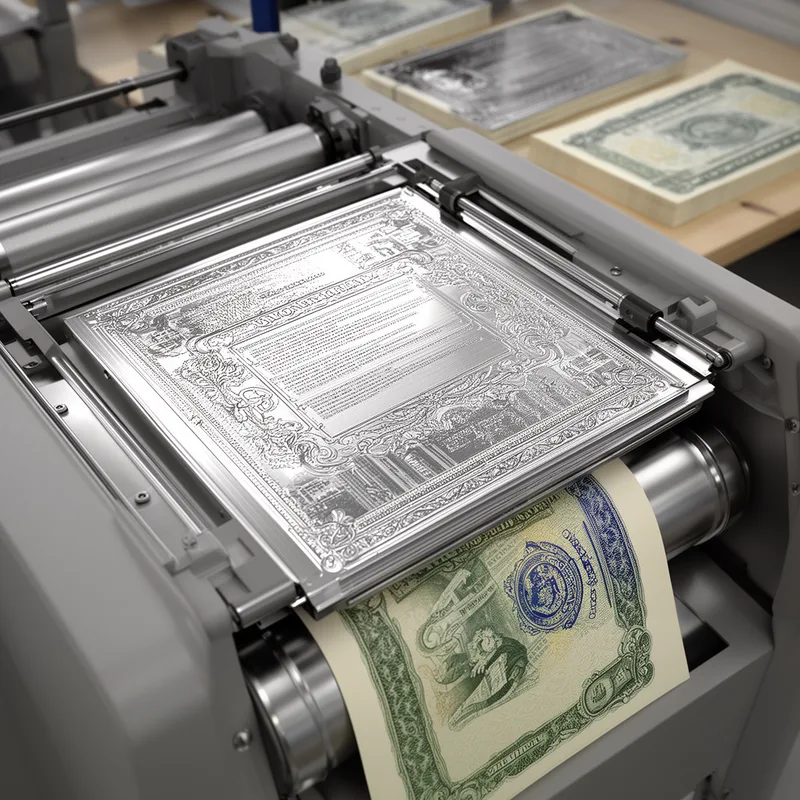
siderography
- noun
- /ˌsaɪdəˈrɒɡrəfi/
- Archaic
- The invention of siderography greatly improved the security of printed banknotes in the 19th century.
Examples
-
Modern currency design still draws on techniques developed through siderography.
-
Have you ever seen a siderography before?
-
Many historical documents were produced using siderography to prevent counterfeiting.
-
The bank uses siderography to produce secure notes.
-
The method of siderography enables the production of banknotes that are difficult to forge.
-
Using siderography, artists can create intricate designs on steel plates for secure document printing.
-
Documents often incorporate security features through the process of siderography to help prevent counterfeiting.
Synonyms

A picture printed from a steel plate with a design cut into it
Surface Forms
Morphology
siderography = sidero + graphy
The word is built from classical combining forms, but the specialized meaning 'steel-plate engraving/printing' is not directly inferable for most learners.
Etymology
Siderography comes from the Greek parts sidero- meaning 'iron' and -graphy meaning 'writing', so it literally means 'writing on iron'. That's why siderography refers to a method of engraving and printing on steel plates to make banknotes and documents hard to fake.

