
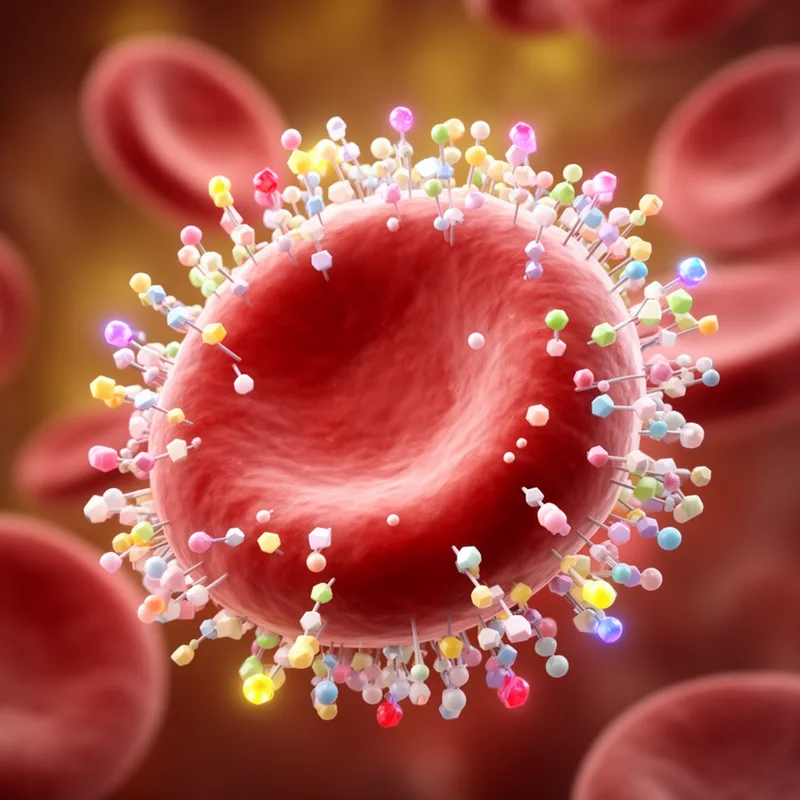
sialic


 1
9.9
- adjective
- /ˈsaɪəlɪk/
- Specialized
- Other modifications occurring in sialic acids may include a substitution of Neu5Ac by non-human Neu5G from dietary sources.
- sialic acid
Examples
-
Inhibition of the sialic acid content at the cell surface has also been the focus of glycosylation modulator research as a promising strategy to modulate cancer cell behavior.
Academic text (2016) -
Thus, changes in sialic acid metabolism in ADHD could be used by Neisseria to escape the host immune defense, which might explain the observed overrepresentation of this genus in our ADHD samples.
Academic text (2018) -
One of the main reasons that breastfeeding is so important for human brain development is because of the sialic acid content of breast milk.
-
Breast milk is rich in sialic acid, which supports the infant's brain development.
-
The presence of sialic acid on cell surfaces plays a crucial role in cancer research.
-
Researchers discovered that sialic acid has unique properties that affect cell communication.
Surface Forms
Morphology
sialic = sialic acid (opaque) = sial + ic
The base 'sialic acid' is a technical biochemical term unfamiliar to average learners, so knowing its parts won't let a B1 learner deduce the adjective's meaning.
Etymology
Sialic comes from the Greek root sialon, which means 'saliva', because scientists first found sialic acids in saliva. So, sialic now describes the 'sugar' found on animal tissues and on the outside of cells, which links the word back to 'saliva'.