
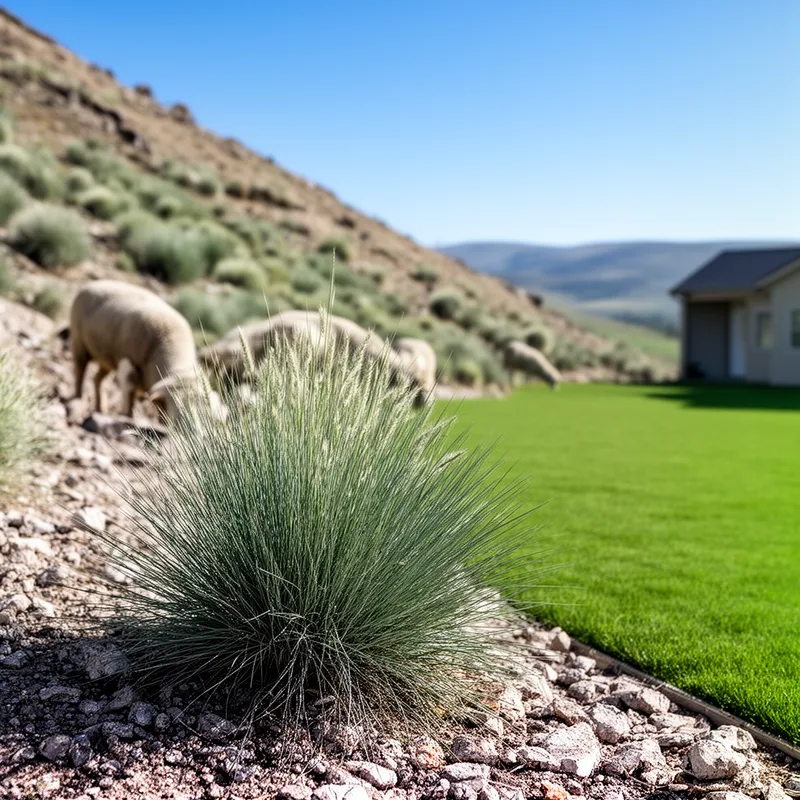
sheep fescue
- noun
- /ʃip ˈfɛs.kju/
- Specialized
- The hillside was covered with sheep fescue, providing excellent grazing for the flock.
Examples
-
The botanist explained that sheep fescue thrives in poor, rocky soils.
-
Many homeowners choose sheep fescue for drought-tolerant lawns.
-
The farmer planted sheep fescue in the pasture.
-
Many sheep fescues thrive in poor soil conditions.
-
Many homeowners choose sheep fescue for its drought-resistant qualities in lawn care.
-
The hillside was covered with sheep fescue, which provided excellent grazing for the sheep.
-
The farmer planted sheep fescue in the pasture to ensure healthy grazing for his livestock.
Synonyms
A grass with thin leaves that grows on hills and is used for sheep grazing and lawns
A short thin grass used for sheep pasture and dry lawns
Surface Forms
Morphology
The phrase denotes a type or variety of fescue associated with sheep (i.e., grass used for grazing sheep), so its meaning is directly and compositionally derived from 'sheep' + 'fescue'. This noun–noun naming pattern is common and cross-linguistically transparent, so a B1 learner who knows both constituent words would grasp the basic meaning (even if botanical specifics require extra knowledge).
Etymology
Sheep fescue gets its name from a type of tough, short grass that sheep often ate on poor, rocky hills, so shepherds used it for grazing. That's why the name shows it is a hardy grass for grazing and why people still use it for dry lawns and sheep pasture today.

