

shaving-brush tree
- noun
- US
- The shaving-brush tree blossoms before its leaves emerge, creating a dramatic display of pinkish flowers.
Examples
-
In botanical gardens, the shaving-brush tree draws attention with its unique, brush-like blooms.
-
The shaving-brush tree is often grown as an ornamental plant in warm climates.
-
The shaving-brush tree is known for its unique flowers.
-
Many shaving-brush trees grow in tropical climates.
-
In botanical gardens, the shaving-brush tree draws attention with its unique, brush-like blooms.
-
The shaving-brush tree blossoms before its leaves emerge, creating a dramatic display of pinkish flowers.
-
The shaving-brush tree is often grown as an ornamental plant in warm climates.
Synonyms
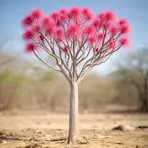
A tropical tree from Mexico and Central America with bright hairy pink flowers at branch ends before leaves appear
Surface Forms
Morphology
shaving-brush + tree
The compound is directly compositional: the modifier 'shaving-brush' (an object with bristles used for shaving) combined with 'tree' yields a tree characterized by features resembling a shaving brush (its dense, hairy flowers). This follows a common noun-modifier + tree naming pattern that is cross-linguistically transparent, so a B1 learner who knows the constituents can infer the meaning.
Etymology
Shaving-brush tree is named for the way its flowers look. Its flowers form a round, hairy bunch at the end of a branch that looks like a shaving brush, so the name describes the tree's 'brush' shape.

