
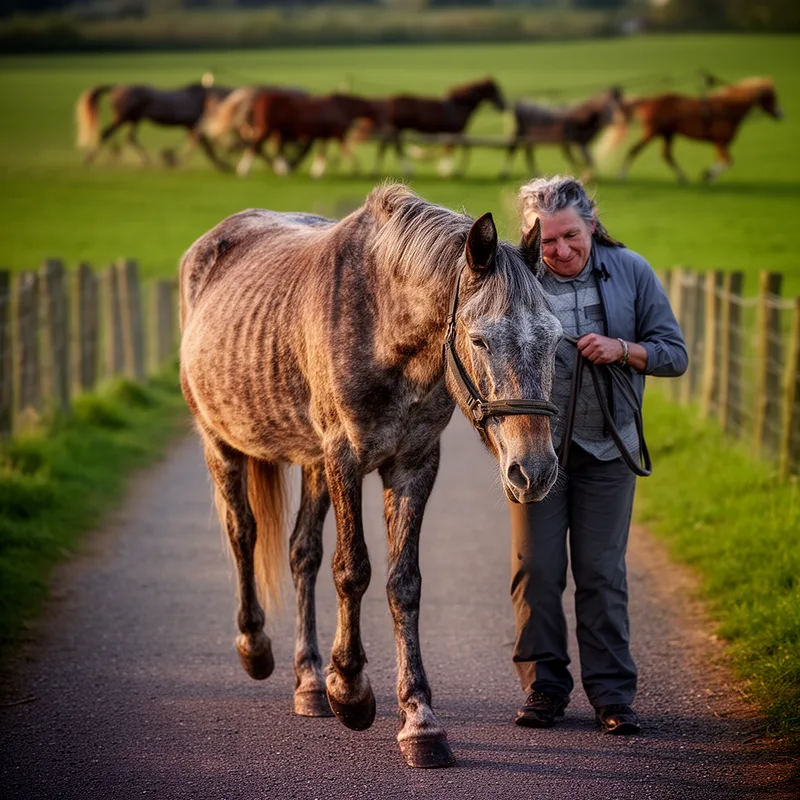
shank-nag
- noun
- Archaic
- After years of faithful service, his shank-nag could no longer keep up with the younger horses.
Examples
-
Even though it was just a shank-nag, he loved his old horse dearly.
-
That old shank-nag can barely walk.
-
The children laughed as the shank-nag trotted slowly down the lane.
-
I saw a shank-nag at the farm yesterday.
-
After years of faithful service, his shank-nag could no longer keep up with the younger horses.
-
Even though it was just a shank-nag, he loved his old horse dearly.
-
That old shank-nag can barely walk.
Synonyms

 8
6.3
8
6.3

An old horse that is tired from hard work
 1
9.9
1
9.9
An old worn-out horse used for work
 1
9.9
1
9.9
An old weak horse that people make work too hard
Antonyms

How Old
- Archaic
 14
1.0
14
1.0
Surface Forms
Morphology
Etymology
Shank-nag comes from shank 'lower part of the leg' and nag 'old horse'. So a shank-nag is easy to picture as a thin-legged, worn-out horse, which is why the word means a horse that is past its prime and not fit for regular work.