
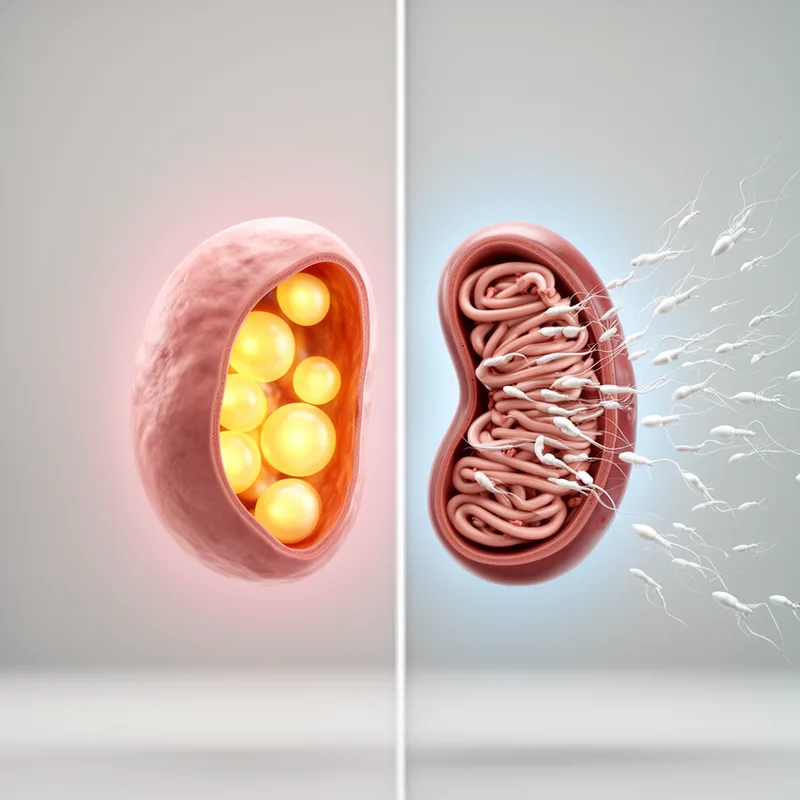
sex gland


 1
4.4
1
4.4
- noun
- /sɛks ɡlænd/
- Specialized
- The sex glands play a vital role in reproduction by producing sex cells necessary for fertilization.
Examples
-
SAM: I'm at the mercy of your sex glands.
-
The male sex glands produce a fluid known as sperm, semen, lubinol, and urine.
Academic text (2011) -
The human body contains two sex glands, the testes in males and the ovaries in females.
-
Hormones released by the sex glands regulate various bodily functions and influence puberty.
Synonyms
 92
6.5
92
6.5
An oval part in the male body that makes sperm and male hormones
 41
4.6
41
4.6
A female organ that makes eggs and hormones for the menstrual cycle
 14
7.0
14
7.0
A body gland that makes sex cells like eggs or sperm
 11
3.1
11
3.1
An organ that makes eggs or sperm, like ovaries, testes, and flower parts
5
3.3
A body part used to make babies, like the penis, vagina, testes, or ovaries
 4
7.1
4
7.1
One of the two male glands that make sperm and the hormone testosterone
Surface Forms
Morphology
The compound is directly compositional: 'sex' (relating to reproduction/sexual characteristics) qualifies 'gland' (an organ that releases hormones or fluids), so a learner can infer it is a gland related to sexual/reproductive function. Knowing the constituents, a B1 learner can reasonably deduce that it refers to organs that produce sex cells or sex-related hormones. This noun+noun compounding pattern is common cross-linguistically, making the meaning transparent.
Etymology
Sex gland: The term sex gland comes from the clear image of a gland that makes 'sex cells' like eggs or sperm and hormones. Here sex points to reproduction and gland means a body part that produces substances, so the phrase means a gland where reproductive cells are made.