
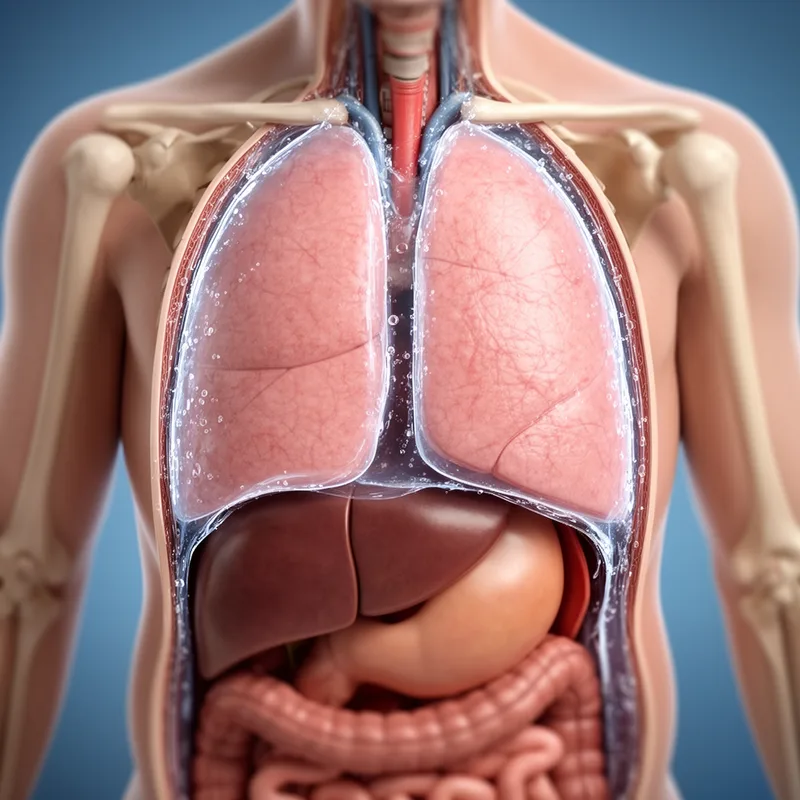
serous membrane
- noun
- /ˈsɪrəs ˈmɛmˌbreɪn/
- Specialized
- The serous membrane secretes a lubricating fluid that reduces friction between organs.
Examples
-
Each lung is enclosed by a serous membrane called the pleura.
-
Inflammation of a serous membrane can lead to painful conditions such as peritonitis.
-
The serous membrane protects internal organs.
-
Inflammation of the serous membranes can cause pain.
-
Each lung is enclosed by a serous membrane called the pleura.
-
The serous membrane secretes a lubricating fluid that reduces friction between organs.
-
Inflammation of a serous membrane can lead to painful conditions such as peritonitis.
Synonyms


 1
9.9
1
9.9
A thin tissue that covers organs and lines body cavities with fluid between its layers
Surface Forms
Morphology
The meaning is directly compositional from 'serous' (associated with thin, watery bodily fluids) and 'membrane' (a thin layer); a learner who knows both constituents can infer it denotes a thin membrane related to watery bodily fluid lining body cavities. Although the term is technical, the relation is literal and predictable from the parts, so the basic meaning is recoverable from the constituents.
Etymology
Serous membrane uses serous, a word meaning 'watery', and membrane, a thin sheet. Imagine two thin sheets with a little watery fluid between them so they can slide without rubbing, and that's why a serous membrane lines inside body spaces and helps organs move easily, 'reducing rubbing'.