
serotinous
- adjective
- /ˈsɛrəˌtɪnəs/
- Specialized
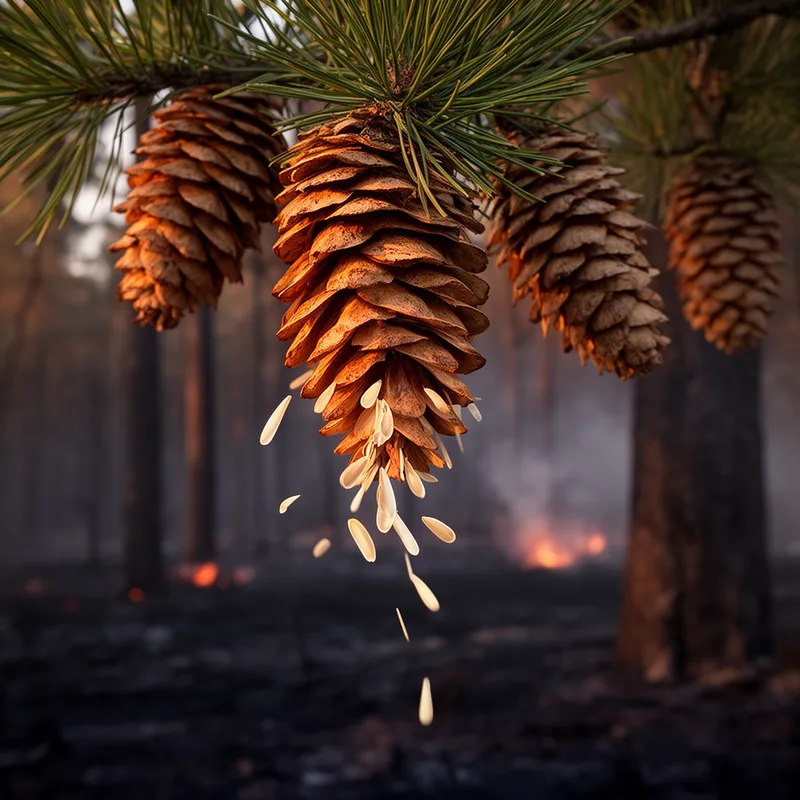
- Lodgepole pine trees have serotinous cones that only release seeds after being exposed to high temperatures from fire.
Examples
-
In some of Yellowstone's burned forests, those in which the percentage of serotinous trees was low before the 1988 fires, the rapid development of herbaceous vegetation may preclude tree establishment for decades.
Academic text (1997) -
For example, lodgepole pine (Pinus contorta var. latifolia) is well known for having serotinous cones that release their seed when heated.
Academic text (1997) -
The serotinous nature of some plants allows their seeds to be released in response to environmental triggers like wildfires.
-
In a serotinous ecosystem, seeds remain dormant until conditions such as fire create the right environment for germination.
Surface Forms
Morphology
serotinous = serotiny (opaque) = serotin + ous
The immediate base 'serotiny' is a rare technical noun and the combining form 'serotin-' is not a productive, known English root, so adding '-ous' yields a specialised adjective that is not derivable by an average B1 learner.
Etymology
The word serotinous comes from Latin serotinus, from serus meaning 'late'. So, think of pine cones that 'wait' to open and only release their seeds later or after an event like a fire.

