

senior citizen
 62
2.0
62
2.0

- noun
- /ˈsiː.njər ˈsɪt.ɪ.zən/
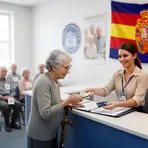
- Many senior citizens rely on social security benefits to support their living expenses after retirement.
- programs for senior citizens
- a senior citizen center
- a group of senior citizens
Loading YouTube…
Watch on YouTubeOld people, drivers, senior citizens on the road.
- Old people, drivers, senior citizens on the road.
- If you're an athlete or a kind of retired senior citizen like me, you prepare.
- You think about people engaged trying to defraud senior citizens of their money.
- They wanted to pick and choose which ribbons they cut, which senior citizen centers they visited.
- And so I said, you think I am a senior citizen.
- Jake Paul, you're fighting a senior citizen.
- I also got commissioned to do some talks for hire for senior citizens at the Shorewood Public Library now that I think about it.
- And when Rick Rule speaks, I listen because he and I are the more senior citizens left in this industry.
- The best part of the public health has been always the maternity care, the Children's Health care and then the senior citizens health care.
- Most poll workers are senior citizens who are not going to be able to risk being poll workers this time around.
- You know, my dad, when I met my dad, he was a senior citizen and he's he was damn.
- But the hardest thing to get a hold of right now is a senior citizen.
- You know, this Irish fellow named Milford King threw a senior citizen into a ditch fire when I was young.
Examples
-
Another economic benefit of healthy aging is that longer and healthier lifespans mean more vigorous senior citizens.
Academic text (2007) -
The program was highly rated by participants and recognized as an attractive program for senior citizens.
Academic text (2012) -
All of this debt was beginning to price our young people and our senior citizens from living in this city.
-
Oh, every week the church hands out food donations to senior citizens.
-
You became a senior citizen five years ago.
-
With the increasing population of senior citizens, it is critical that they have capable advocates.
Academic text (2015) -
Most poll workers are senior citizens who are not going to be able to risk being poll workers this time around.
-
Pat, OK, Even a senior citizen can think of something that they are thankful for.
-
He'd been living at a senior citizens' home and getting by on Social Security and food stamps.
Academic text (2011) -
And while we're at it, how about another $100 to subsidize prescriptions for senior citizens?
Academic text (2002)
Synonyms
 203
2.7
203
2.7
A person who is older than another person
 175
1.0
175
1.0
A person who is much older than most adults
 162
3.1
162
3.1
An older person who is respected for age and experience
 11
1.7
11
1.7
A person in the later years of life
 11
2.0
11
2.0
A person who receives regular payments after they stop working
 3
1.0
3
1.0
A person who has stopped working because of age or health
 3
7.6
3
7.6
A person who is clearly past middle age

 1
4.2
1
4.2
A person who gets regular money from the government after they stop working because of age

A person who is older and usually retired

A respected older person with grey hair who gives advice
Antonyms

How Old
6
7.2
 8
7.6
8
7.6
- Informal
3
7.6
62
2.0
175
1.0
Surface Forms
Morphology
The meaning 'an older person' is directly and compositionally derived from 'senior' (advanced in years) modifying 'citizen' (a person/member of a state) to yield 'older citizen' — effectively 'an older person'. While 'citizen' can carry a legal nuance, in this phrase it functions generically as 'person', and the adjective+noun pattern for age is cross-linguistically common, so a B1 learner who knows both words will readily infer the MWE meaning.
Etymology
Senior citizen is a polite, official phrase that began as a respectful way to refer to older people. People combined senior (meaning later in life) and citizen (a member of the community) to show respect, so it now means 'an older person', often someone who is 'retired' or over a certain age.