
semisedentary
- adjective
- /ˌsɛmɪsɛˈdɛnˌtɛri/
- Specialized
 :
semisedentario
:
semisedentario
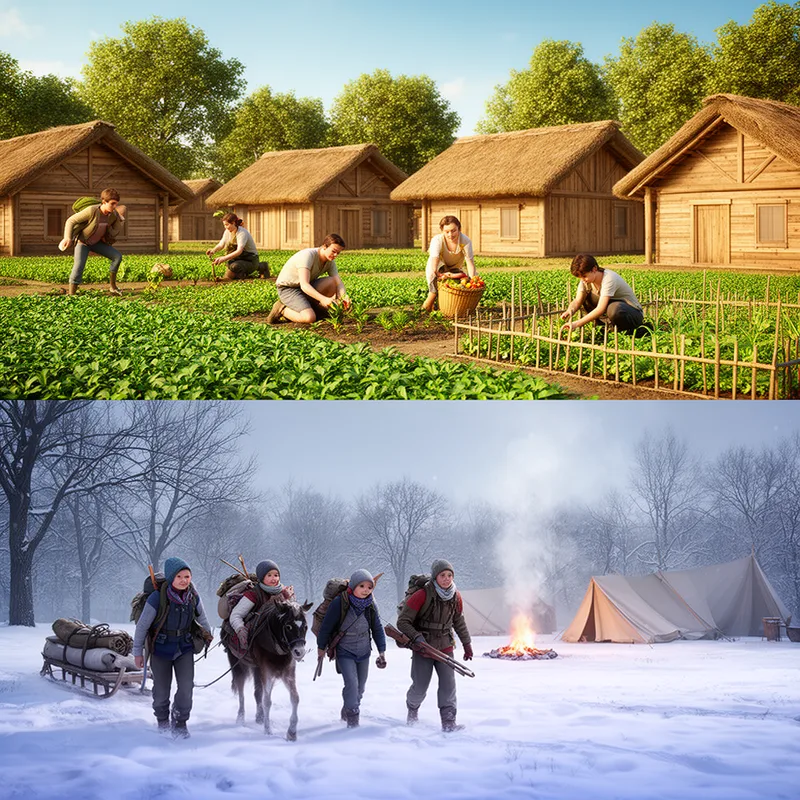
- The village's semisedentary lifestyle allowed them to cultivate crops while also following the migration patterns of local wildlife.
Examples
-
Tuareg territorial organization is also adjusted to the production system with semisedentary hamlets and nomadic camps.
Academic text (1992) -
In the semisedentary hamlet where I resided, there were four fully nomadic women among the total of 104 households; that is, women who moved for several months at a time with their herds, taking sections of their tent with them and leaving the frame intact.
Academic text (1992) -
Around his political leadership evolved a multiethnic, semisedentary, indigenous community.
Academic text (2000) -
The economic attraction of Fort Lemhi led to the formation of a seasonal, semisedentary indigenous community.
Academic text (2000) -
A myth from a semisedentary caravanning village relates the shock of two daughters upon discovering their gardener husbands are really monkeys (Rasmussen 1990:83-108).
Academic text (1992) -
Many semisedentary tribes move their homes several times a year to access fresh pastures for their livestock.
-
The semisedentary community established a base for agriculture but would relocate for seasonal hunting.
Synonyms


 1
8.3
1
8.3
Living some months in one place and moving with animals at other times
Antonyms
How Settled

Surface Forms
Morphology
Etymology
The word semisedentary comes from the prefix semi- meaning 'half' and sedentary meaning 'sitting in one place'. So a semisedentary group lives partly in one place and partly moves at certain times of the year, not fully settled or fully nomadic.