
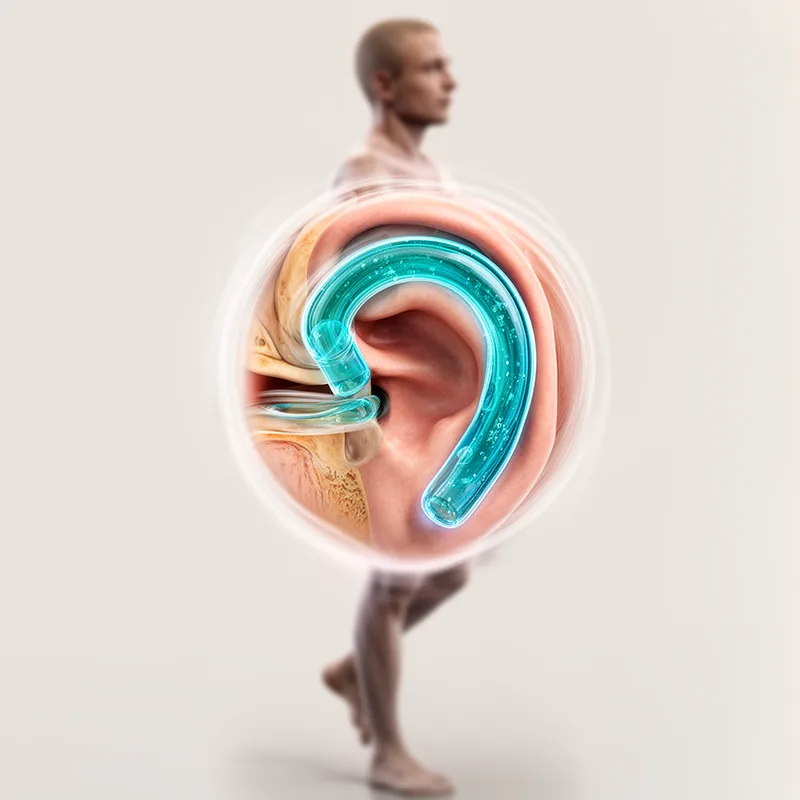
semicircular canal


 1
6.1
1
6.1
- noun
- /ˌsɛmɪˈsɜrkjələr ˈkænəl/
- Specialized
- Superior semicircular canal dehiscence (SCD) syndrome is a recognized condition associated with varying degrees of vestibular and auditory dysfunction.
- the superior semicircular canal
- the lateral semicircular canal
- the horizontal semicircular canal
Examples
-
In both cases, the superior semicircular canal is addressed through occlusion or resurfacing techniques.
Academic text (2009) -
The facial nerve is identified immediately inferior to the lateral semicircular canal.
Academic text (1996) -
The two main parts of the inner ear are the semicircular canals and the cochlea.
Academic text (1990) -
The semicircular canals, just above the windows, are filled with fluid and lined with hairs.
Academic text (1990) -
The incus and lateral and posterior semicircular canals are identified.
Academic text (1996) -
The acceleratory reflexes, attributed to the semicircular canals, assist in tilt detection and sway displacement.
Academic text (1999) -
The semicircular canals in the inner ear help you maintain your balance while walking.
-
Damage to the semicircular canals can lead to difficulties in maintaining equilibrium.
-
When you turn your head quickly, the semicircular canals register the movement and assist with balance.
Surface Forms
Morphology
The meaning is directly derivable from its parts: 'semicircular' means semicircle-shaped and 'canal' means a tube or passage, so together they denote a curved tube. This noun-modifier composition is a regular, cross-linguistic pattern, so a B1 learner who knows both constituents can infer the basic referent (a curved fluid-filled tube), even if they may not know the specific anatomical location or function.
Etymology
Semicircular canal is named for its shape and role: semi means 'half' and circular means round, and canal means a small tube in the inner ear. When you turn your head, the fluid in these curved tubes moves and tells your brain about the turn, so they help with 'balance'.