
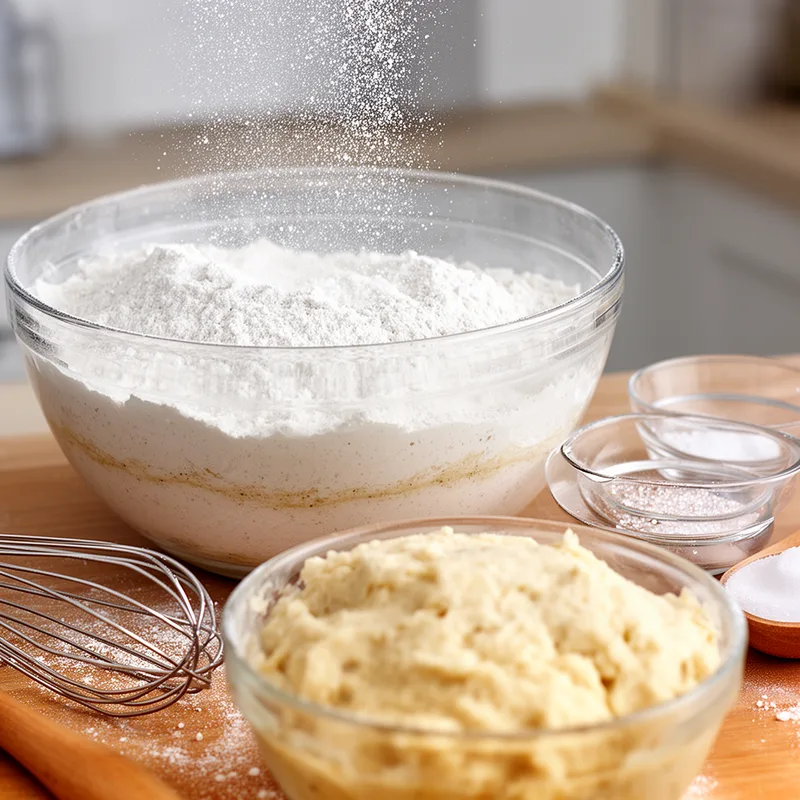
self-rising flour
 1
3.0
1
3.0

- noun
- /ˈsɛlfˌraɪzɪŋ flaʊər/
- US
- For pancakes, combine milk and one cup of self-rising flour in a large bowl.
- 1 cup self-rising flour
- 1 cup sugar with self-rising flour
- 1 cup milk and self-rising flour
Examples
-
I used self-rising flour since it was all I had on hand, and the cookies came out soft and decadent.
Blog text (20) -
However, I didn't have baking soda, so I used self-rising flour.
Blog text (20) -
(A note about flour: you can also nix the baking powder and use self-rising flour for fluffier pancakes.)
Blog text (17) -
To make biscuits, you can use 2 cups of self-rising flour instead of all-purpose flour.
-
The recipe calls for 3 cups of self-rising flour to ensure the dough rises properly.
Synonyms

 1
3.0
1
3.0
Flour with baking powder and salt added so baked goods rise
Surface Forms
Morphology
self-rising + flour
The meaning is directly compositional: 'self' (by itself) + 'rising' (causing to rise) combined with 'flour' yields flour that rises without extra leavening. A B1 learner who knows 'self', 'rising', and 'flour' can readily infer that this flour contains a leavening agent, so the expression is transparent.
Etymology
The noun self-rising flour comes from the idea that self, meaning 'by itself', and rising, meaning 'going up', are already in the flour. Bakers add baking powder and salt to plain flour so the dough will 'rise' when you 'bake', and you do not need to add extra ingredients.