
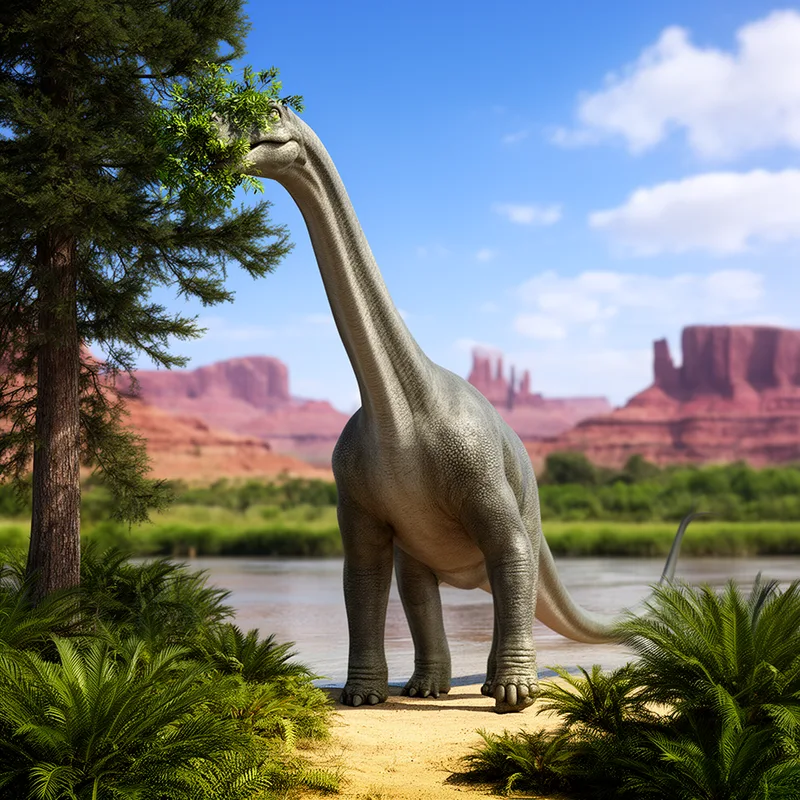
seismosaur
- noun
- /ˈsaɪzməˌsɔr/
- Specialized
- Fossils of the seismosaur were discovered in New Mexico, exciting paleontologists worldwide.
Examples
-
The seismosaur was one of the longest land animals to have ever lived.
-
Children are often amazed by the sheer size of a seismosaur at the natural history museum.
-
The seismosaur was one of the largest dinosaurs to ever roam the Earth.
-
Did you know that a seismosaur could grow up to 100 feet long?
-
Children are often amazed by the sheer size of a seismosaur at the natural history museum.
-
Fossils of the seismosaur were discovered in New Mexico, exciting paleontologists worldwide.
-
The seismosaur was one of the longest land animals to have ever lived.
Synonyms
A very large plant-eating dinosaur from western North America that lived long ago
Surface Forms
Morphology
Etymology
Seismosaur comes from Greek parts seismo- meaning 'earthquake' and -saur meaning 'lizard', as in seismic and dinosaur, so it literally means an 'earthquake lizard'. That's why a seismosaur is seen as a very huge dinosaur that could shake the ground.

