
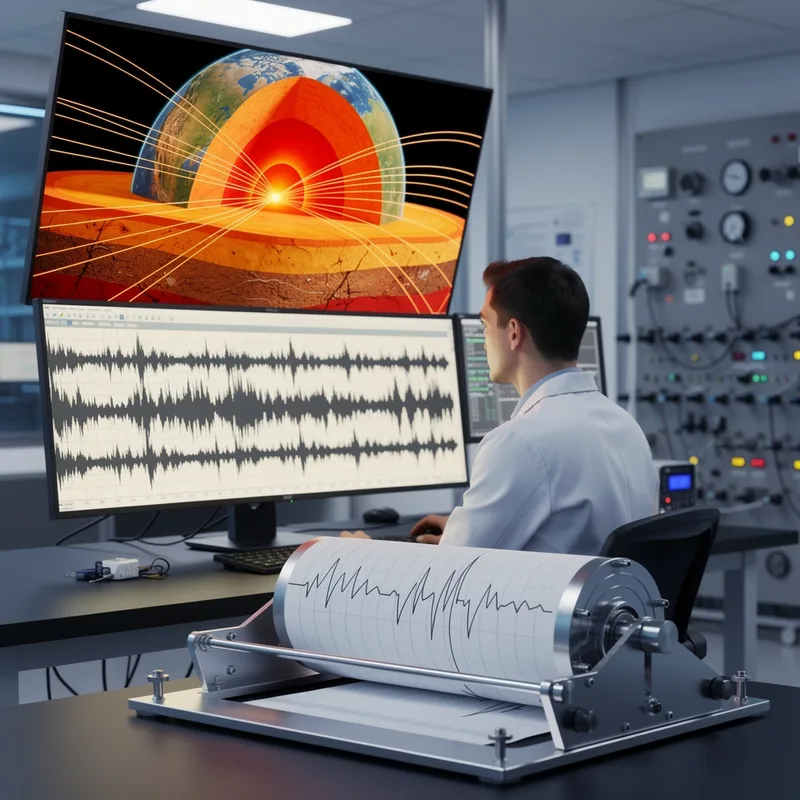
seismology
 2
6.8
2
6.8

- noun
- /saɪzˈmɑːlədʒi/
- Specialized
 :
sismología
:
sismología
- IRIS, or Incorporated Research Institutions for Seismology, originated as a purely scientific endeavor, and it still serves primarily as an instrument for geophysicists studying the Earth's core and crust.
- seismology lab
- modern seismology
- citizen seismology
Well, it's the study of the seismology of stars.
- Well, it's the study of the seismology of stars.
- That means that what it can also do is something called Astro seismology.
Examples
-
Have him call Walter Russell at the Seismology Institute.
-
My interest in Mr. Malley has to do with seismology and geology.
-
On Earth, such additional information could be derived from seismology.
Academic text (1999) -
I've got the seismology report right here if you want to look at it.
-
Serena Johnson is on the ground at the seismology center at Caltech.
-
Seismology is also critically important to archaeologists confronted with the effects of earthquakes in their digs.
Academic text (2006) -
Ten years from now, Gareth will head the Seismology unit of the UCLA Task Force and devise a system for accurately predicting earthquakes.
-
The scientist explained that seismology helps us understand how earthquakes occur beneath the Earth's surface.
-
At the conference, researchers presented their latest findings in seismology to enhance earthquake prediction methods.
-
Her studies in seismology revealed significant details about the ancient seismic activity in the region.
Surface Forms
Morphology
Etymology
Seismology comes from the Greek root seismos meaning 'shaking' and the common ending -logy meaning 'study', like in biology or geology. So, seismology is literally the study of the Earth's shaking — that is, earthquakes and the waves they make.