
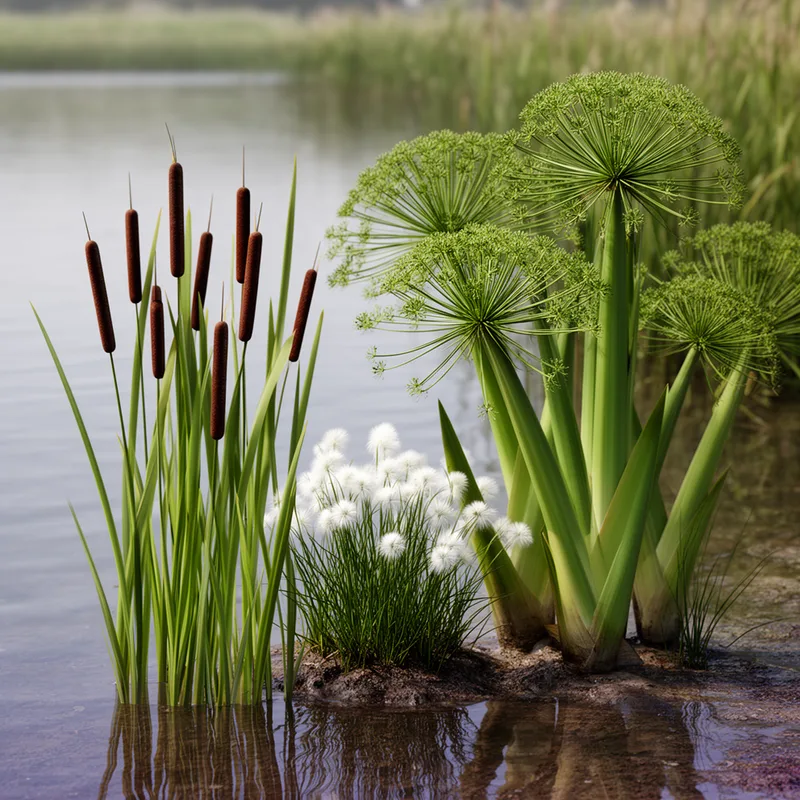
sedge family
- noun
- /sɛdʒ ˈfæmɪli/
- Specialized
- The sedge family includes important species such as papyrus and cotton grass.
Examples
-
Many wetland ecosystems are dominated by members of the sedge family.
-
Bulrushes, which belong to the sedge family, are commonly found near lakes and rivers.
-
The sedge family includes many interesting plants.
-
Many species in the sedge family thrive in wetlands.
-
The sedge family includes various plants like bulrushes and papyrus that thrive in wetlands.
-
Botanists have classified more than 5,000 species within the sedge family, making it a diverse group.
-
In many ecosystems, members of the sedge family play a key role in stabilizing soil and providing habitat.
Synonyms
A family of grass-like plants like papyrus and bulrushes
Surface Forms
Morphology
The meaning 'a grouping of related sedge plants' is directly and transparently derived from 'sedge' (a grasslike plant) + 'family' (a scientific grouping). This noun‑noun compositional pattern (X family = the taxonomic group of X) is common and cross‑linguistically regular, so a B1 learner who knows both constituents will readily understand the phrase.
Etymology
Sedge family groups plants that look like grasses but often grow in wet places. The word sedge means 'grass-like' wet plants and family means a 'group', so the phrase names that whole group of related plants.

