

secretory phase
- noun
- /ˈsɛkrɪˌtɔri feɪz/
- Specialized
- During the secretory phase, progesterone levels rise to prepare the uterus for a fertilized egg.
Examples
-
If pregnancy does not occur, the secretory phase ends with the onset of menstruation.
-
The secretory phase occurs after ovulation.
-
A biopsy revealed changes in the endometrial tissue consistent with the secretory phase.
-
During the secretory phase, progesterone levels rise.
-
During the secretory phase, the uterus thickens in preparation for a possible pregnancy.
-
A biopsy revealed changes in the endometrial tissue consistent with the secretory phase.
-
If pregnancy does not occur, the secretory phase concludes with the shedding of the uterine lining.
Synonyms


 1
6.1
1
6.1
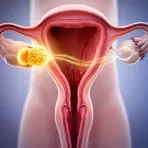
A phase after the ovary releases an egg when the body prepares the womb for pregnancy
Surface Forms
Morphology
The compound is compositionally built: 'secretory' means pertaining to secretion and 'phase' means a stage, so a learner who knows both constituents can infer it refers to the stage characterized by secretion. Detailed clinical specifics (corpus luteum, progesterone, implantation) require domain knowledge, but the core meaning is transparently derivable from the parts.
Etymology
The term secretory phase comes from the time after an egg leaves the ovary when the body 'secretes', or releases, the hormone progesterone to thicken the womb lining. So secretory points to that release of hormones and phase means a stage, which is why the name means the stage when the body prepares the womb for a possible pregnancy.