
secondary storage


 1
3.8
1
3.8
- noun
- /ˈsɛkəndɛri ˈstɔrɪdʒ/
- Specialized
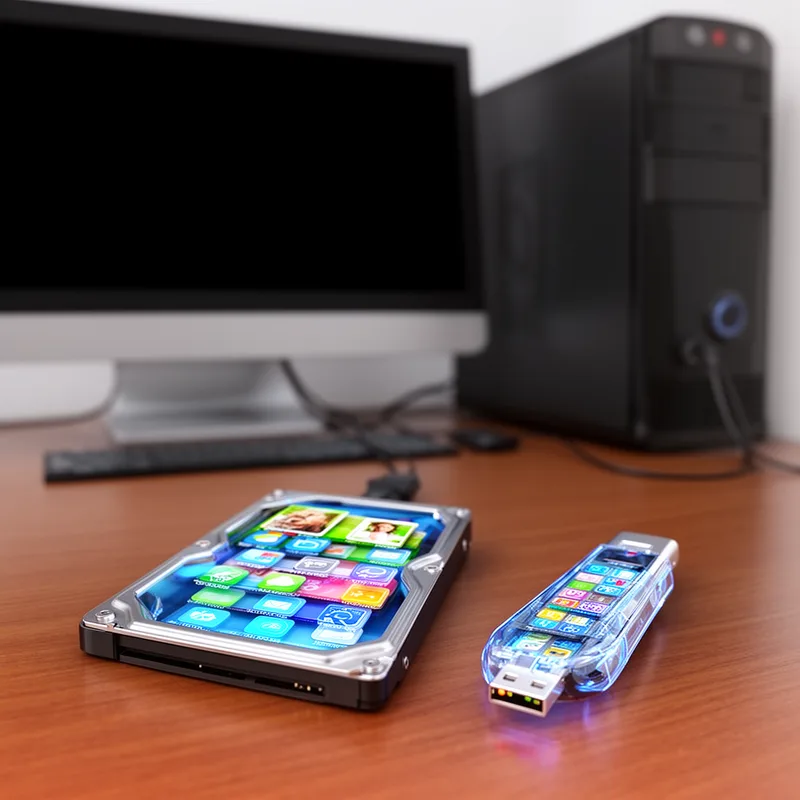
- External hard drives are often used as secondary storage for backing up important files.
- secondary storage systems
Examples
-
Current flash-memory devices involve some problems that must be solved if they are to be used to realize SSFs (solid-state files, i.e., secondary storage systems that use semiconductor memory devices instead of other storage media, such as magnetic storage devices).
Academic text (1995) -
If the transaction completes successfully, the modified record will be written to the secondary storage device, replacing the version that existed before applying the transaction.
Academic text (1991) -
Secondary storage systems using semiconductor memory devices
Academic text (1995) -
The following sections briefly review secondary storage systems using semiconductor devices and the characteristics of flash EEPROMs currently on the market.
Academic text (1995) -
Such storage systems have very simple structures, being organized as flat memory; however, they require special treatment because batteries are needed, except when the secondary storage systems are used solely as temporary memories.
Academic text (1995) -
This technology is also expected to be employed to replace secondary storage systems such as hard disk drives (HDDs), rather than simply replacing ROMs and EPROMs (erasable programmable ROMs) 1, 3.
Academic text (1995) -
A solid-state drive is an excellent option for secondary storage because it offers faster data access speeds.
-
Many businesses rely on secondary storage to keep large amounts of data safe and easily retrievable.
Synonyms
 148
2.7
148
2.7
A device or place that holds computer data
 5
3.5
5
3.5
A thing that stores computer files, like a hard drive or USB stick
 1
4.1
1
4.1
A device like a hard drive or CD that holds computer files

A device like a hard drive or flash drive that keeps data for a long time

Computer memory that keeps data when power is off
Surface Forms
Morphology
The meaning is directly built from 'secondary' (not primary) + 'storage' (a place/device for storing information), so it denotes storage that is not the main/primary memory. This compositional technical pairing (primary vs. secondary storage) is straightforward and cross-linguistically common, so a B1 learner who knows both words can infer the meaning.
Etymology
Secondary storage gives a simple picture: secondary means 'second' and storage is a place to keep things, like a cabinet for old files. That's why secondary storage refers to devices such as hard disks and flash drives where a computer keeps data for the long term, separate from its fast 'primary memory'.