
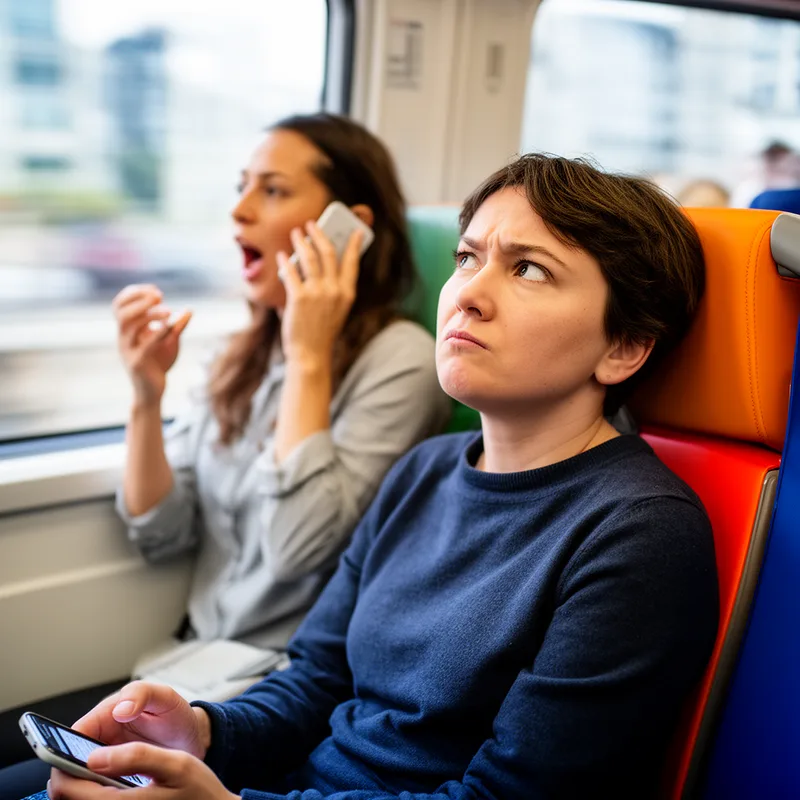
second-hand speech
- noun
- /ˈsɛkənd hænd spiːch/
- The rise of mobile phones has made second-hand speech a common annoyance in public spaces.
Examples
-
I try to ignore second-hand speech on the train, but sometimes it's impossible to tune out loud conversations.
-
She found second-hand speech distracting, especially when people shared personal details in crowded cafes.
-
I overheard some second-hand speech while waiting for the bus.
-
Have you ever experienced second-hand speech in a crowded café?
-
On the bus, I often encounter second-hand speech, as people chat loudly on their phones.
-
While shopping, I couldn't help but listen to second-hand speech from a nearby group sharing secrets.
-
Hearing second-hand speech in the park made me feel like an intruder in someone else's conversation.
Antonyms


Surface Forms
Morphology
second-hand + speech
The meaning 'overheard or indirect speech' follows directly from combining 'second-hand' (indirect, coming via someone else) with 'speech' (spoken words). This is a regular compositional pattern (like 'second-hand information') and thus predictable for a B1 learner who knows both constituents.
Etymology
Second-hand speech may come from the idea of 'second-hand smoke': the word second-hand means something you get from someone else and speech is talk, so it creates the image of words passing to you through the air without you joining the talk. That's why it now means 'conversation you overhear'.