
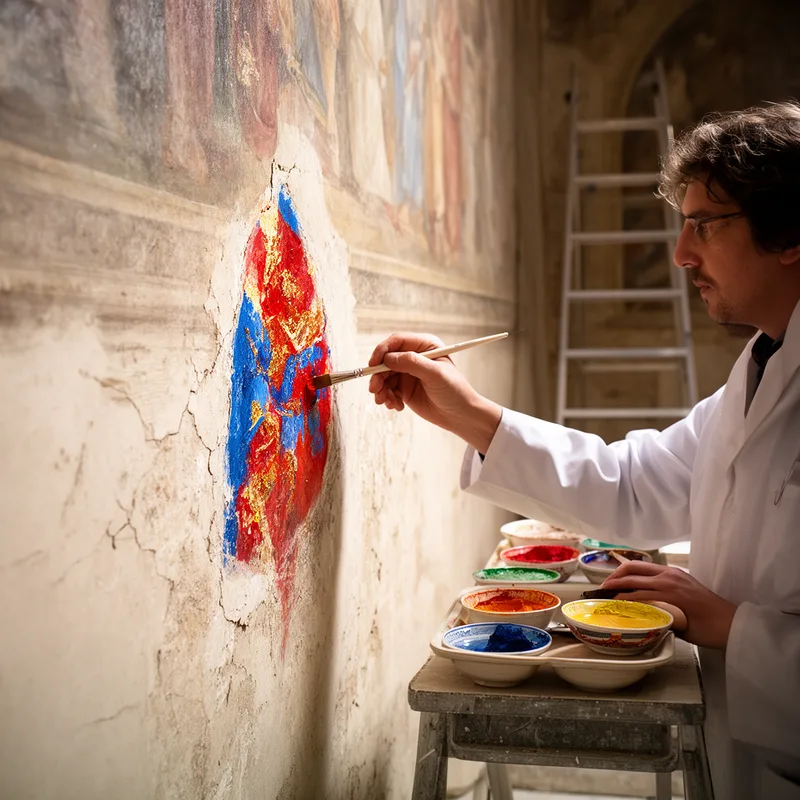
secco
- noun
- Specialized
- Unlike true fresco, secco allows for more detailed work after the plaster has dried.
Examples
-
Conservationists debated whether to use secco or fresco techniques for the mural restoration.
-
The artist used secco to create vibrant wall murals.
-
The artist chose the secco method to restore the faded colors on the ancient wall.
-
Can you explain what secco means in painting?
-
The artist chose the secco technique to paint vibrant images on the dry plaster walls.
-
Using secco, she expertly created detailed designs that would last for many years.
-
He prefers the secco method, as it allows him to apply colors directly onto dry plaster.
Surface Forms
Etymology
Secco comes from the Italian secco and Latin siccus, both meaning 'dry', because the pigments are put on dry plaster instead of wet plaster, so the secco technique lets artists work after the wall has dried and add fine detail.

