
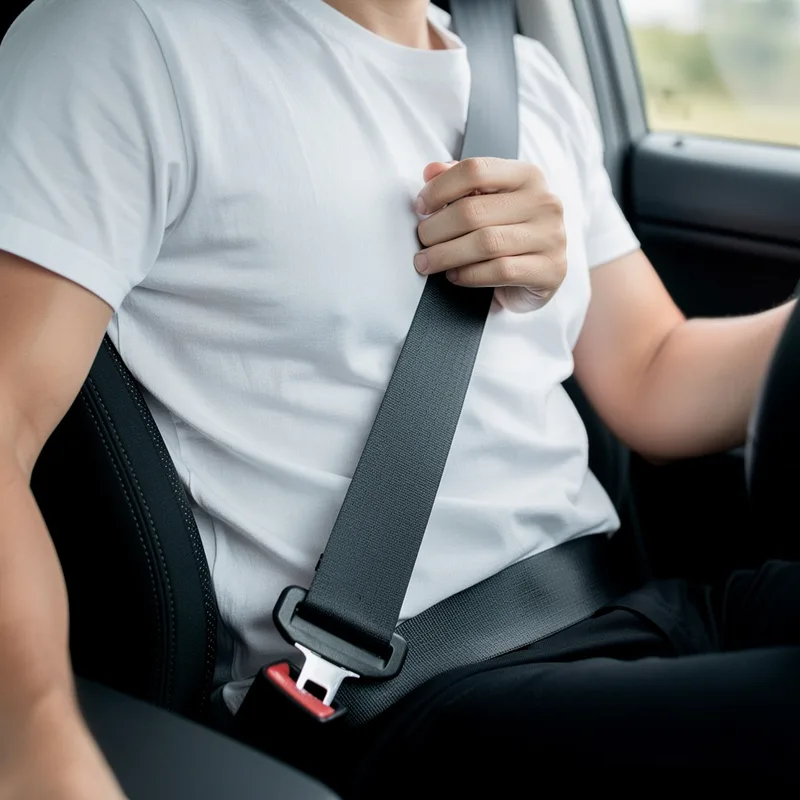
seat belt
 148
1.0
148
1.0

- noun
- /siːt bɛlt/
- The plane reached cruising altitude, and the seat belt sign went off.
- use seat belts
- increase in seat belt use
Loading YouTube…
Watch on YouTubeFortunately, this car has automatic seat belt extenders.
- Fortunately, this car has automatic seat belt extenders.
- I had my seat belt on and I took it off.
- Oh, and before we took off, she reached over and put my seat belt on and my God.
- I think, you know, unless you were the only one with your seat belt on, you know, that's luck.
- According to Copa, police stopped Reid, they said, for not wearing a seat belt.
- We're like waiting and then I see him like go to put the seat belt on.
Examples
-
You'll have to fasten your seat belt first," he said, so I did.
Fiction book (1994) -
Fasten your seat belt, please.
-
I had my seat belt on and I took it off.
-
Put your seat belt on.
-
Put on your seat belt.
-
You insist that your child wear his seat belt anytime he gets into the car.
Blog text (15) -
Please fasten your seat belt.
-
A taxi driver is likely to remind you to fasten your seat belt.
Academic text (2008) -
Instinctively, Caleb pulled the seat belt to strap himself in.
Fiction book (1996) -
In an accident, wearing a seat belt can save your life.
Synonyms
 68
1.0
68
1.0
A strap in a car or plane that keeps you safe in a crash
 7
1.0
7
1.0
A strap that keeps a person fastened to a seat to protect them in a crash or fall
How Protective


Surface Forms
Morphology
The meaning 'a belt used with a seat to keep a person secure' is directly derivable from combining 'seat' (where one sits) and 'belt' (a strap), following a transparent noun‑noun compounding pattern. This compositional pattern is common cross‑linguistically and matches learners' expectations about functional compounds, so a B1 learner who knows both constituents will readily understand it.
Etymology
The name seat belt comes from the simple image of a belt fastened to a seat to hold a person in place. The belt stops you from moving forward in a sudden stop or crash, so the phrase means the 'safety belt' that helps protect you.