

sea lavender
- noun
- /siː ˈlævəndər/
- Specialized
- Clusters of sea lavender brightened the edges of the tidal flats with delicate purple hues.
- sea lavender (Limonium)
Examples
-
Botanists study the tolerance of sea lavender to salty environments in marsh restoration projects.
-
After the storm, much of the sea lavender along the coast was washed away.
-
The sea lavender blooms beautifully in coastal areas.
-
Have you seen the sea lavenders in the salt marsh?
-
In the salt marshes, sea lavender grows beautifully, flowering with spikes of delicate white petals.
-
The coastal garden is filled with vibrant sea lavender, which attracts bees and butterflies during the summer.
-
While walking along the shore, we spotted clusters of sea lavender thriving in the sandy soil.
Synonyms


 1
9.9
1
9.9
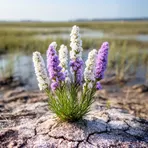
A small plant that grows in salt marshes with spikes of white or pale purple flowers

A plant with spikes of white or light purple flowers that grows in salt marshes

A plant that grows by the sea with small purple flowers called sea lavender
Surface Forms
Morphology
The phrase combines 'sea' (coastal) and 'lavender' (a fragrant shrub), so a learner who knows both constituents can infer it is a lavender-like plant that grows by the sea. While the exact botanical genus (Limonium) may be unfamiliar, the general meaning is directly predictable from the parts and follows common noun‑noun compounding patterns.
Etymology
Sea lavender may get its name from a simple picture: it grows by the sea and has small purple flowers like lavender, even though it is not real lavender. That's why the name means 'a coastal plant with pale purple flowers'.