

sea-lavender family
- noun
- Specialized
- The sea-lavender family includes many salt-tolerant plants found in coastal regions worldwide.
Examples
-
Did you know that the sea-lavender family is also known as Plumbaginaceae?
-
Members of the sea-lavender family are popular in gardens for their attractive flowers.
-
Botanists have studied the adaptability of species within the sea-lavender family to saline environments.
-
The sea-lavender family includes various species that thrive in coastal regions.
-
Many species in the sea-lavender family are adapted to thrive in salty coastal conditions.
-
The sea-lavender family is renowned for its vibrant flowers that attract gardeners and pollinators alike.
-
Herbaceous plants belonging to the sea-lavender family can often be seen flourishing near the ocean shore.
Synonyms

A group of plants with flowers like small herbs and shrubs that often grow near the sea
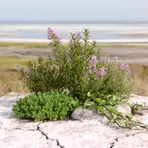
A group of plants like herbs, shrubs, and vines that grow in salty places worldwide
Surface Forms
Morphology
sea-lavender + family
The phrase is compositionally built: 'family' denotes a taxonomic grouping and 'sea-lavender' (sea + lavender) signals a type of coastal lavender-like plant, so the overall meaning 'the plant family containing sea-lavenders' is directly derivable. Although the precise botanical name (Plumbaginaceae) is specialized, a B1 learner who knows the constituent words can infer it refers to a group of related coastal plants.
Etymology
Sea-lavender family gets its name from two clear images: these plants often grow by the salt water (the sea) and their flowers look like small lavender blooms. So, the name helps you remember it is a 'family' or group of coastal, lavender-like plants.

