

screw propeller
- noun
- /skruː prəˈpɛlər/
- Specialized
- He explained how the design of the screw propeller allows boats to move forward with minimal resistance.
Examples
-
The ship's speed increased as the screw propeller rotated efficiently through the water.
-
The first use of the engine was to haul dredges to the surface, and soon a "screw" (propeller) was added to propel the vessels.
Academic text (1996) -
Many modern vessels rely on screw propellers for their ability to provide powerful thrust across various water conditions.
Synonyms
 46
3.9
46
3.9

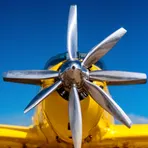
A set of blades that spin to push a boat or plane forward
 16
4.6
16
4.6
A part with blades that turns to push a plane or boat forward
 8
5.1
8
5.1
A rotating blade that pushes water or air, like on a ship

A machine with blades that turns to push a plane or boat forward
Surface Forms
Morphology
The noun is compositional: 'screw' (here meaning a helical/rotating element) + 'propeller' (a device with blades producing thrust) directly describes a propeller shaped/acting like a screw. While the nautical/technical sense of 'screw' is specialized, the overall meaning is literal and predictable from the constituents, so a learner who knows both words will readily infer the sense.
Etymology
Screw propeller gets its name from its spiral look: the blades form a spiral like a screw, and when they turn they seem to 'screw' through the water. That's why the term describes a propeller that 'moves forward' a ship by turning.