

scorpion shell
- noun
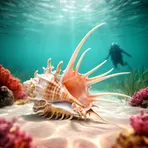
- The outer spines of a scorpion shell make it easily recognizable among other marine snails.
Examples
-
The diver found a beautiful scorpion shell on the coral reef during his trip.
-
Many collectors prize the unique shape of the scorpion shell in their shell collections.
-
I found a beautiful scorpion shell on the beach.
-
The scorpion shell has unique curved spines.
-
Many collectors prize the unique shape of the scorpion shell in their shell collections.
-
The diver found a beautiful scorpion shell on the coral reef during his trip.
-
The outer spines of a scorpion shell make it easily recognizable among other marine snails.
Synonyms

 45
1.0
45
1.0

A small slow animal with a soft body and a spiral shell found on land or in water

 1
9.9
1
9.9
A large sea snail with a shell of long decorative spines found in warm shallow seas

A small sea creature with a spiral shell that moves slowly
Surface Forms
Morphology
The phrase signals a shell that is associated with or resembles a scorpion (combining 'scorpion' + 'shell' gives a plausible image), so some relation between constituents and meaning is evident. However, a B1 learner would not reliably infer the specific denotation—a particular tropical marine snail species with long curved spines—nor that it names a kind of sea snail rather than part of an actual scorpion, so the mapping is only partially predictable.
Etymology
Scorpion shell was named because the long, curved spines on the shell's edge look like a scorpion's tail or legs, so people used that picture to describe it. That's why the name refers to a tropical 'sea snail' with these spines.