
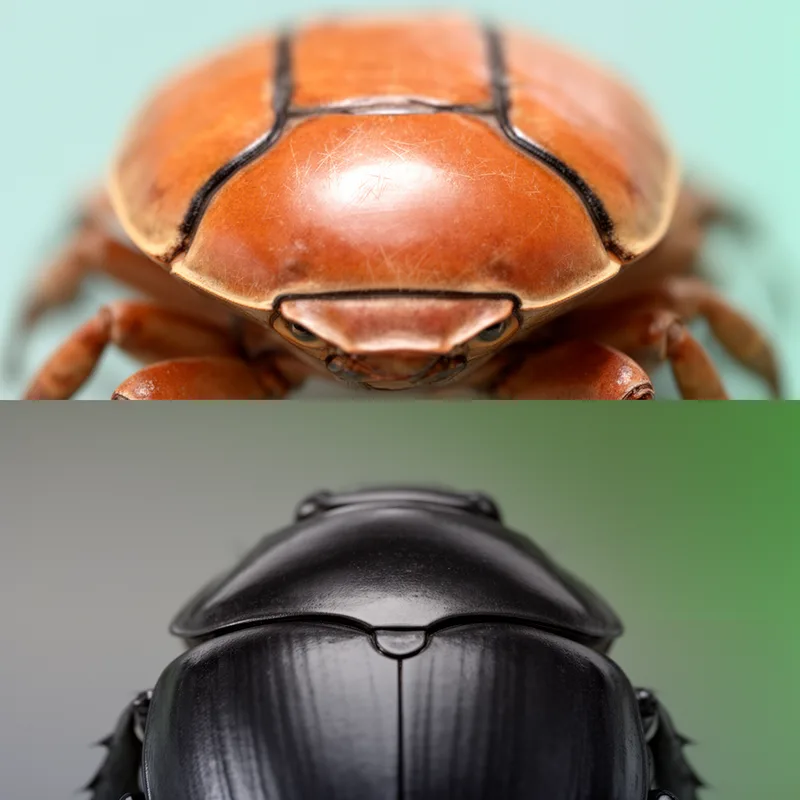
sclerite


 1
9.9
- noun
- /ˈsklɛrɪt/
- Specialized
- The exoskeleton of many arthropods contains hard plates called sclerites that provide protection.
Examples
-
Scientists observed how the sclerites of the beetle vary in shape and size across different species.
-
When examining the fossil, they noted the well-preserved sclerites that indicated the arthropod's age.
-
The top surface of the creature bears more flattened, palmate sclerites.
Academic text (1990) -
The halkieriid is, as anticipated, a large animal (up to 7 cm), bearing many sclerites (up to 2,000 or more).
Academic text (1990) -
The abdominal fat body and attached dorsal sclerites were retained as a single unit to quantify biological age.
Academic text (2018) -
The body is elongate, flattened, and wormlike, with the sclerites arranged in zones corresponding to forms previously named.
Academic text (1990) -
A groove separates the zone of siculate sclerites from a lateral region of cultrates.
Academic text (1990) -
Individuals were then pinned through the thorax, and the digestive tract was accessed by removing the dorsal abdominal sclerites.
Academic text (2018)
Surface Forms
Morphology
sclerite = scler + ite
Built from the specialized combining form 'scler-' (hard) + the noun-forming suffix '-ite'; because 'scler-' is not a common standalone English base and is technical, learners cannot reliably derive the meaning from the parts.
Etymology
Sclerite comes from the Greek root skler-, from skleros, which means 'hard', and the same root appears in the medical word sclerosis meaning 'hardening'. That's why a sclerite is a small 'hard' plate or piece of an insect or crab exoskeleton.