
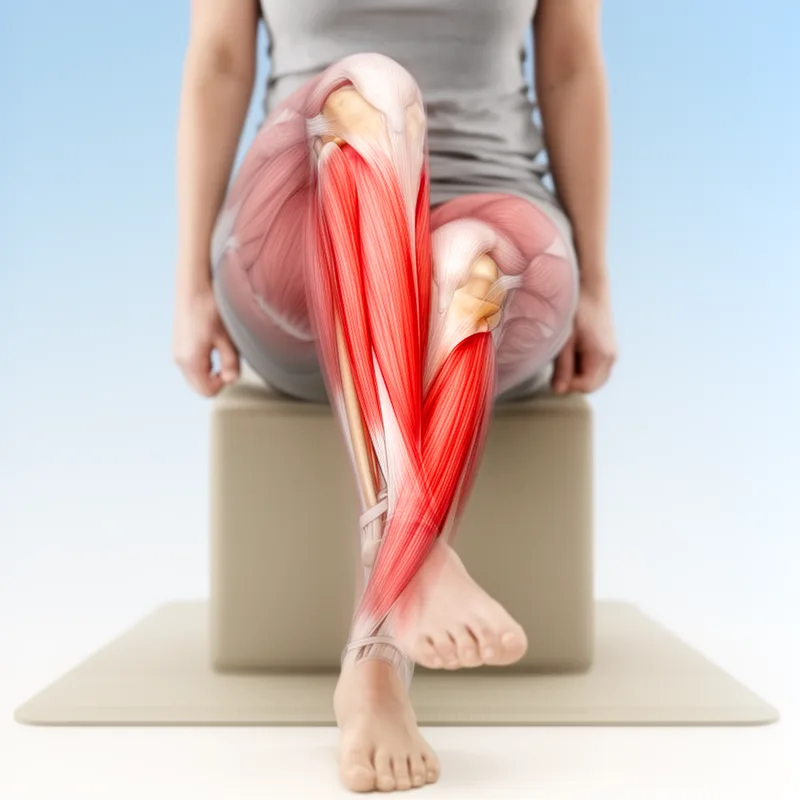
sartorius muscle


 1
7.2
1
7.2
- noun
- /sɑːrˈtɔːr.i.əs ˈmʌs.əl/
- Specialized
- The sartorius muscle stretches from the hip to the inner side of the knee.
Examples
-
The sartorius muscle is involved when sitting cross-legged on the floor.
-
Injury to the sartorius muscle can make leg rotation and crossing difficult.
-
The sartorius muscle is essential for leg movement.
-
Did you know the sartorius muscle is the longest muscle?
-
The sartorius muscle runs from the hip to the knee, allowing the leg to rotate and cross over.
-
When injured, the sartorius muscle can make movements such as crossing your legs very painful.
-
To stretch the sartorius muscle, sit on the floor and bring the soles of your feet together.
Synonyms
 1
9.9
1
9.9
A long thin muscle along the front of the thigh that helps bend and turn the leg
A long thigh muscle that helps you cross one leg over the other
Surface Forms
Morphology
The term combines a specific anatomical name 'sartorius' (a thin muscle) with the generic noun 'muscle', so its meaning as a particular thigh muscle is directly derivable from the constituents. This noun + noun naming pattern is common in anatomy and across languages, making the expression immediately comprehensible to a learner who knows both words.
Etymology
Sartorius muscle gets its name from the old Latin word 'sartor', which means 'tailor'. Tailors often sat cross-legged while they sewed, and this long muscle is used to rotate the leg and to cross it, so the name helps you remember its job.