
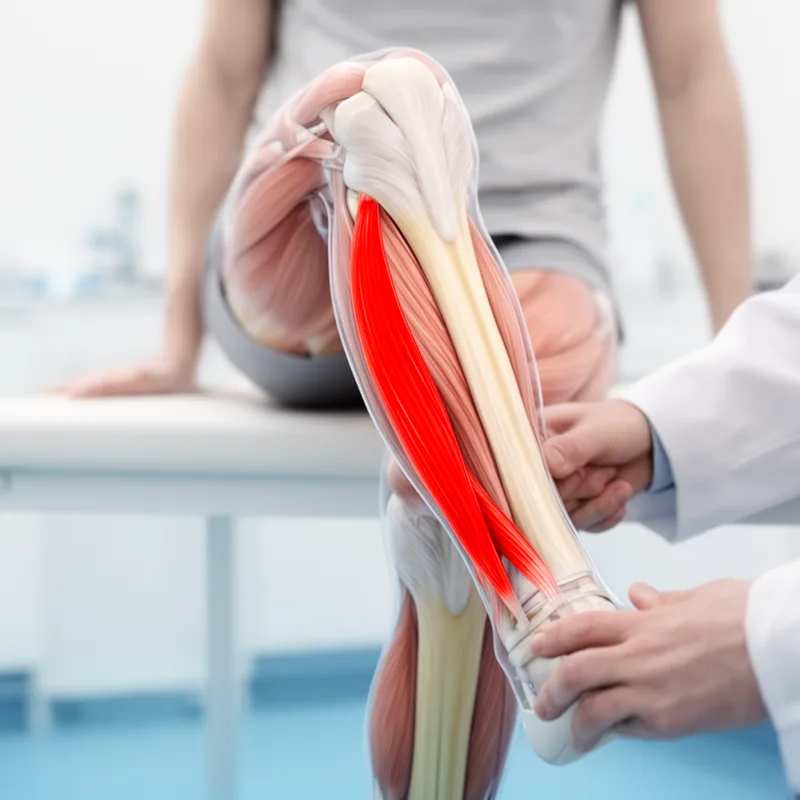
sartorius


 1
9.9
1
9.9
- noun
- /sɑːrˈtɔːr.i.əs/
- Specialized
- As previously noted, almost one third of all IM electrodes in the vasti of the quadriceps intended to extend the knee during standing with FES were contaminated by rectus femoris, sartorius, or TFL.
- electrodes in sartorius
Examples
-
Tensor Fasciae Latae (TFL): Similar to the results for sartorius, spillover from electrodes in TFL occurred relatively infrequently.
Academic text (2001) -
In addition, with the knee extended by the quadriceps, the sartorius can externally rotate and abduct the thigh, thus making swing-to gait difficult and increasing the risk of hitting the walker with the toes.
Academic text (2001) -
The sartorius, the vas deferens, the symphysis pubis...
Fiction book (1998) -
The saphenous nerve lies deep in the lower extremity and extends through the sartorius and gracilis muscles.
Academic text (2002) -
While intramuscular electrodes targeted for the quadriceps frequently spilled over to sartorius, electrodes in sartorius showed a relatively low rate of spillover.
Academic text (2001) -
While intramuscular electrodes targeted for the quadriceps frequently spilled over to sartorius, electrodes in sartorius showed a relatively low rate of spillover.
Academic text (2001) -
Less frequently, electrodes placed in the sartorius (16 percent), gracilis (12 percent), and quadriceps or long hamstrings (7 percent and 6 percent, respectively) produced reflexes when stimulated.
Academic text (2001) -
A majority of these (22) spilled over through the femoral nerve to activate the rectus femoris or sartorius to flex the hip when the primary desired action was knee extension.
Academic text (2001) -
A large number (11) of the spillover electrodes stimulated the sartorius, either in isolation (8) or together with rectus (3), causing noticeable abduction of the thigh.
Academic text (2001) -
The sartorius muscle helps to flex the hip and knee, allowing for smooth leg movements.
Synonyms
 1
7.2
1
7.2
A long thin thigh muscle that helps rotate the leg and cross one leg
A long thigh muscle that helps you cross one leg over the other
Compounds
- Specialized
1
7.2
A long thin thigh muscle that helps rotate the leg and cross one leg
Surface Forms
Etymology
Sartorius comes from the Latin word sartor, which means 'tailor', because tailors often sat with their legs crossed while they sewed. This long, thin muscle helps you cross one leg over the other, so the name is a handy way to remember its job.