
sarsen


 1
9.9
- noun
- /ˈsɑːsən/
- UK
- Nowhere in ancient Europe can there have been a project as challenging—and dangerous—as moving a large sarsen to Stonehenge.
- sarsen stones
Examples
-
Each sarsen weighed between seven and 55 tons and had to be carefully maneuvered into place.
Academic text (2008) -
The route along which the bluestones traveled must have traversed several territories, and even the sarsens may have come from a neighboring realm.
Academic text (2008) -
To understand Stonehenge, we need to know more about the sarsens, how they were moved and carved, and exactly where they came from.
Academic text (2008) -
And if you look at the Sarsen stone uprights, which are the big stones forming that outer circle, that ring, there are lentils on top.
-
Stonehenge had 75 of these huge "sarsens," dressed sandstone boulders that were quarried 20 miles away.
Academic text (2008) -
The Plain settles flat upon the earth, pressed outward to a distant horizon, and only the gray pillars of the sarsen stones have the strength to push up skyward.
Fiction book (1993) -
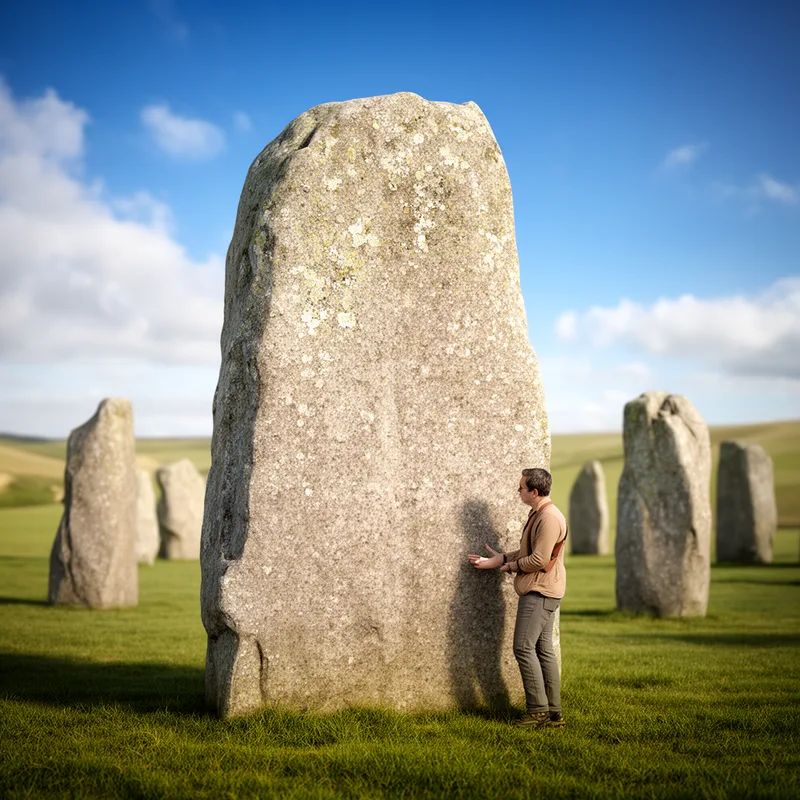
The massive sarsen stones at Stonehenge are impressive examples of ancient construction.
-
Archaeologists have studied the location of sarsen stones to learn more about their origins.
-
Each sarsen is a large block of sandstone, often used in monumental structures throughout southern England.
Surface Forms
Etymology
Sarsen comes from the older name Saracen stone, because people long ago used Saracen as a word for 'foreign' or Muslim people. They called the strange, very large sandstone blocks 'Saracen stones', and that name was shortened to sarsen, which is why the word today means those big stones used in ancient monuments.