
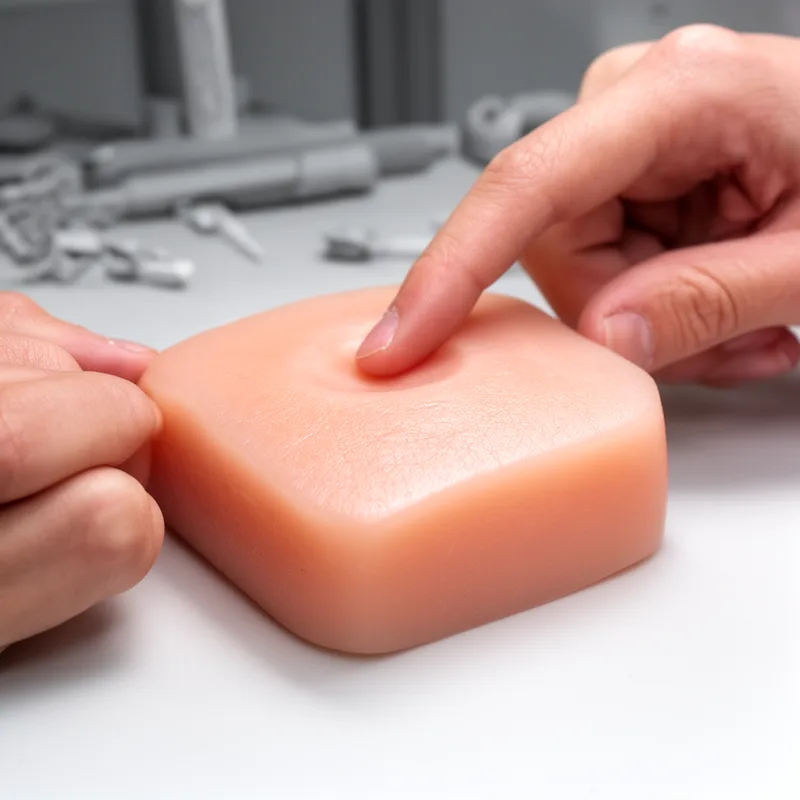
sarcoid


 1
9.9
- adjective
- /ˈsɑr.kɔɪd/
- Specialized
- After examining the biopsy, the pathologist confirmed that the sarcoid tissue had characteristics resembling normal skin.
Examples
-
The doctor explained that the sarcoid lesions were similar in appearance to flesh but were actually abnormal growths.
-
Mitchell's group detected ribosomal RNA specific to M. tuberculosis in splenic tissue of sarcoid patients.
Academic text (2003) -
No systemic symptoms coexisted with the multiple sarcoid lesions on the patient's arms, eyelids, forehead, and malar areas.
Academic text (1998) -
(n21) Saboor's group found Mycobacterium species DNA on polymerase chain reaction in the bronchopulmonary lavage fluid of 70% of sarcoid patients, compared with only 9% of controls.
Academic text (2003) -
In patients with sarcoid conditions, the affected areas may appear swollen and flesh-like due to inflammation.
Synonyms
 19
3.8
Plump and soft on the body, like thick cheeks or arms
Surface Forms
Morphology
sarcoid = sarco- (opaque) = sarco + oid
The combining form 'sarco-' and the medical suffix '-oid' are specialist elements unfamiliar to the average B1 learner, so the meaning is not readily deducible.
Etymology
Sarcoid comes from the Greek root sarc-, from sarx, meaning 'flesh', and the ending -oid meaning 'like', the same -oid you see in asteroid. So sarcoid means 'flesh-like' or 'relating to flesh', which is why we use it for growths or textures that look like real tissue.