
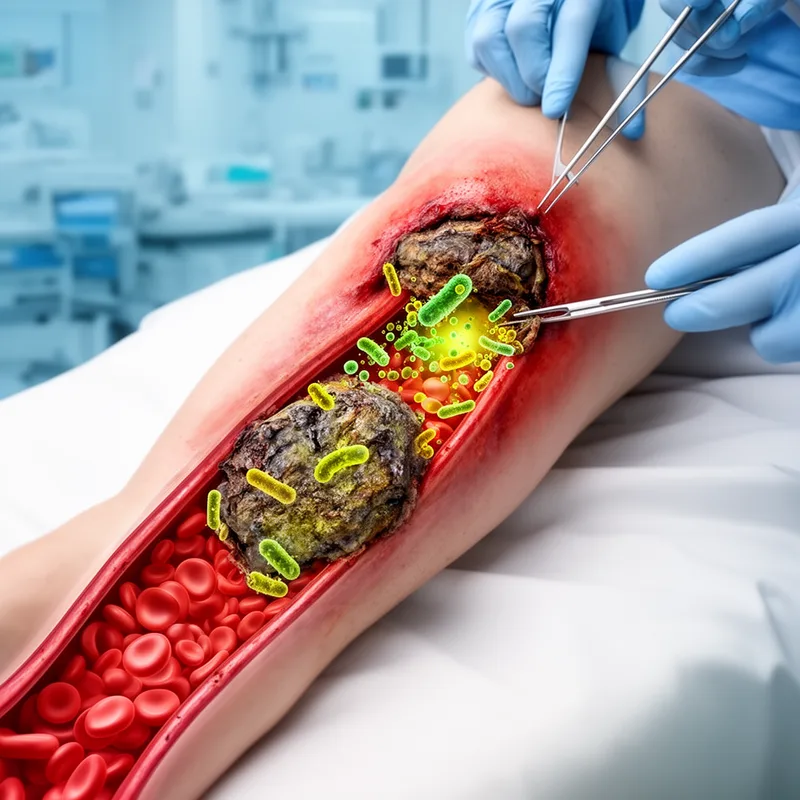
sapremia
- noun
- /sæˈpriːmiə/
- Archaic
- The surgeon explained that untreated wounds could lead to sapremia if contaminated with rotting tissue.
Examples
-
Proper sterilization techniques have greatly reduced the risk of sapremia in modern hospitals.
-
Symptoms of sapremia include fever and chills.
-
In the early 1900s, sapremia was a significant complication in battlefield injuries.
-
The patient was diagnosed with sapremia after the surgery.
-
In the early 1900s, sapremia was a significant complication in battlefield injuries caused by bacteria from decomposing flesh.
-
Proper sterilization techniques have significantly reduced the risk of sapremia in hospitals, ensuring better patient outcomes.
-
The surgeon warned that untreated wounds could lead to sapremia if they became contaminated with putrefied tissue.
Antonyms

 ∞
1.0

The condition of a person's body and mind, especially being free from illness or injury
Surface Forms
Morphology
sapremia = sapr + emia
The elements are medical combining forms ('sapr-' for putrefaction and '-emia' for a blood condition) that are not recognizable to an average B1 learner, so the meaning is not derivable from common English base words.
Etymology
The word sapremia comes from Greek parts sapr- meaning 'rotten' and -emia meaning 'blood', the same -emia you see in anemia. So sapremia literally means 'rotten blood' and is used for the kind of blood poisoning that comes from decaying tissue.